
For twenty years the ritual was the same: buy a phone, pop a tray, insert a small plastic SIM card, wait for signal. The eSIM quietly ends that. Instead of a card you handle, the SIM becomes software burned into a chip inside the device — a profile you download, not a thing you insert (eSIM, Wikipedia). The change sounds minor. The use case is not.
The practical win is that your phone number and carrier relationship become something you can change in minutes, from anywhere, instead of something locked inside a piece of plastic in a drawer.
What an eSIM actually is
A traditional SIM is a removable smart card that tells the network who you are. An eSIM — short for embedded SIM — is the same identity logic, but stored on a tiny, rewritable chip soldered onto the phone’s board. The standard is managed by the GSMA, the mobile-industry body, so profiles from different carriers interoperate (SIM card, Wikipedia).
Because the SIM lives in firmware, you provision it over the air. A carrier sends an encrypted profile — often via a QR code or its app — and your phone loads it. No shop, no eject tool, no waiting for a card in the mail. You can store several profiles on one device and switch between them.
The use case: switching carriers without the chore
The obvious one is changing networks. On a physical-SIM phone, switching carriers means obtaining a new card, physically swapping it, and hoping you didn’t lose the old one. On an eSIM phone, you scan a code or tap a link and the new profile downloads. For anyone who has ever stood in a carrier store on a Saturday, that is the entire point: the friction that kept you loyal (or stuck) simply disappears.
This matters most in markets with lots of virtual operators and short-term deals. You can hop to a cheaper plan, test it alongside your current one, and keep the old line alive until you’re sure. The SIM is no longer the thing holding you hostage.
The use case: two numbers, one phone
Most eSIM-capable phones let you run a physical SIM and an eSIM at the same time, or two eSIM profiles, with one active for calls and another for data. That single feature solves a problem a whole generation of users hacked around with two handsets:
- Work and personal on one device, with clean separation.
- Local plus travel — your home number stays put while a local data profile handles cheap data abroad.
- A backup line you can switch to if your main carrier drops coverage.
For frequent travelers, this is the quiet killer feature. You land in another country and download a local data eSIM in the taxi, without losing your home number or paying roam-like-a-tourist rates on your primary line (Roaming, Wikipedia).
The use case: smaller devices, fewer trays
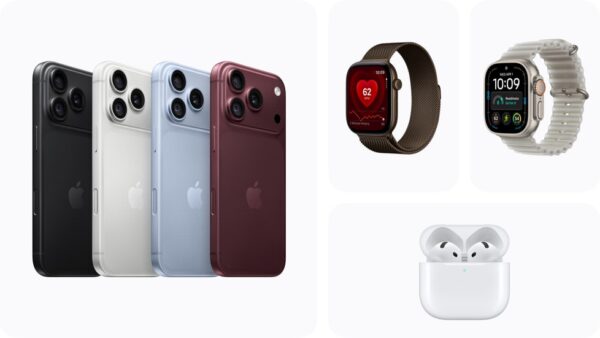
Embedding the SIM also frees hardware space and removes a failure point — the fragile tray and the easily lost card. That is why Apple, from the iPhone 14 in the US, dropped the physical SIM tray entirely and went eSIM-only; many flagship Android phones now support eSIM alongside a physical slot. Wearables, tablets, and connected cars use eSIM for the same reason: there is no room, and no one wants to manage a card in a watch.
For device makers, killing the tray means more room for battery or antenna, and one less mechanical part to break. For you, it means one less tiny object to misplace.
Where the edges are
Honest limits. eSIM support is not uniform. Some budget phones still ship without it, and not every carrier in every country offers eSIM provisioning — particularly smaller regional operators. Before you rely on it, confirm your carrier supports eSIM downloads, not just physical SIMs.
Transferring to a new phone is also not the simple “move the card” it used to be. Because the profile is cryptographic, moving it to a replacement device usually means re-provisioning through the carrier — scanning a fresh code or using the carrier’s transfer tool — rather than physically relocating a card. It’s smoother than a store visit, but it isn’t literally lifting a chip out. And a carrier-locked phone may restrict which eSIM profiles you can load.
Why it matters for buyers
If you are shopping for a phone in 2026, the practical rules are straightforward: prefer eSIM support, because it future-proofs the easiest carrier switch you’ll ever make; check that your carrier actually provisions eSIMs; and if you travel, treat dual-SIM (physical + eSIM) as a feature worth paying for. The tray-less design isn’t a gimmick — it’s the direction the whole industry is moving, and the convenience compounds the first time you change plans from your couch.
For the market, the incentive is the interesting part. When switching carriers is a tap instead of a chore, operators compete harder on price and service, because the cost of leaving them is finally near zero. That is the structural shift eSIM really delivers: a phone identity you control, not one a card controls for you.
Bottom line: an eSIM is a downloadable, embedded SIM profile that replaces the plastic card — letting you switch carriers over the air, run a work and personal number on one device, and add cheap local data abroad without losing your home line. The tray isn’t just disappearing; the lock-in it represented is too.