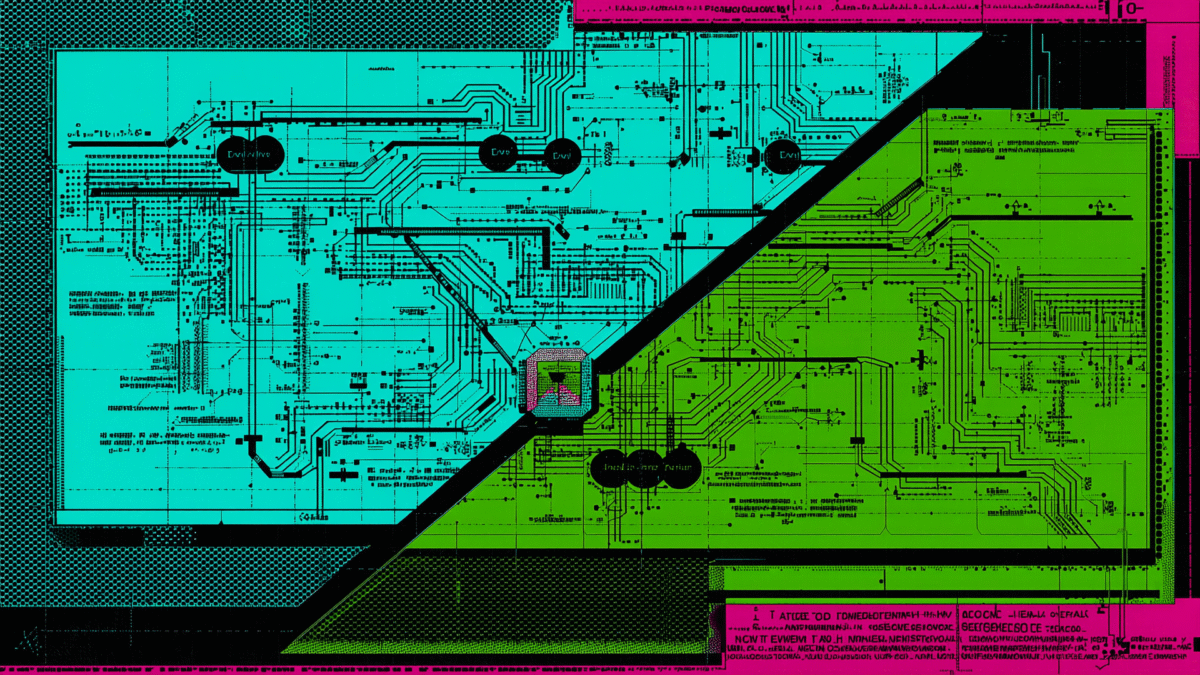
Vitalik Buterin has redrawn Ethereum’s long-term plan to treat privacy and defense against quantum computers as central goals rather than side projects. The shift appears in the Ethereum Foundation’s latest “strawmap,” a draft base-layer upgrade plan that Buterin overlaid on his original 2023 roadmap diagram and shared on Monday The Defiant.
The strawmap is maintained by the Foundation’s Architecture team and sketches seven network upgrades through 2029 at a pace of roughly one every six months, according to the same report The Defiant. What stands out to Buterin is not what moved up the list but what was absent from the 2023 diagram entirely: privacy, post-quantum defenses, and an execution engine intended to outgrow the Ethereum Virtual Machine.
Two of the new items map to formal proposals. Fork-choice enforced inclusion lists, filed as EIP-7805, let a committee of validators force transactions into every block to preserve censorship resistance. A second proposal, EIP-8288, defines a frame type for post-quantum signatures and STARK aggregation, letting transactions declare large quantum-safe signatures as dependencies that a block builder collapses into one recursive proof to keep fees down.
The plan sets five “north stars.” The base chain should confirm transactions with finality in seconds, process 10,000 transactions per second using zero-knowledge proofs of the EVM, let Layer 2 networks reach 10 million transactions per second, keep its cryptography safe against quantum attacks for centuries, and support shielded transfers that hide payment details, the report states The Defiant.
Buterin also questions the EVM’s future. He points to leanISA, an Ethereum research design, and RISC-V, an open chip instruction set, as simpler and more efficient successors, and muses about demoting the EVM to an intermediate representation rather than a hard-coded protocol feature The Defiant.
Across the design, recursive STARKs and AI-accelerated formal verification appear as dependencies Buterin says the project is “okay betting the technical future of Ethereum on” The Defiant.
One visibly uncertain box is “tapered issuance burn,” linked to EIP-8363 and penciled in for 2027–2028 as a way to destroy a rising share of validator rewards; Buterin has not posted on it, the report notes The Defiant.
The roadmap lands as Ethereum’s fee base shrinks: base-layer fees fell to $8.3 million in July from $39.6 million in August 2025, a 79% drop over 11 months, while ETH traded at $1,873 with a $226 billion market cap, per the article’s citation of DefiLlama and CoinGecko data The Defiant.
Dankrad Feist, a researcher at the Stripe-backed chain Tempo and a former Ethereum Foundation researcher, argued the 2029 schedule is too slow: “I think we should be ambitious and get it done in ~1 year. I think this is realistically possible now with LLMs,” he wrote on July 4.
For readers tracking the Foundation’s broader restructuring, the roadmap arrives alongside deep staff and budget cuts announced earlier this year Ethereum Foundation eliminates 54 roles, 40% budget cut.
Editorial note: Citation cleanup: we trimmed duplicate citation links that repeated the same source after multiple paragraphs. Every fact and quote is unchanged; the source remains cited where each claim appears.