
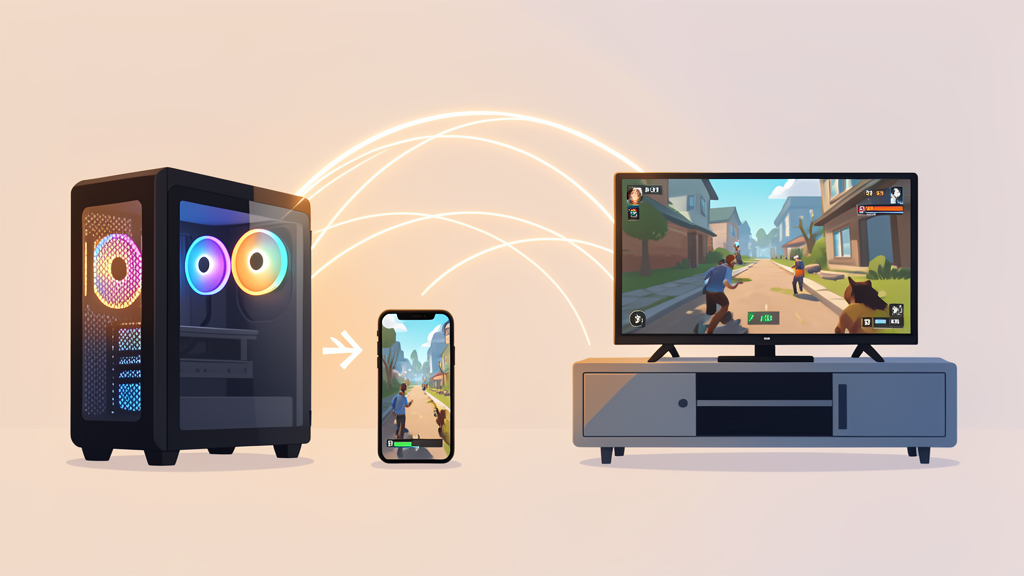
Game emulators, open-source tools that replicate legacy console hardware to run original titles on modern devices, operate within clear legal guardrails for personal use as of mid-2026, per official project and industry sources. This explainer breaks down how game emulators function, uses the widely adopted open-source Dolphin emulator as a primary case study, and outlines the legal boundaries that permit personal archiving while prohibiting copyright infringement, as explained by official project documentation.
How Game Emulators Replicate Legacy Console Hardware
Emulating a legacy gaming console’s full functionality requires recreating every hardware component, not just its central processing unit (CPU) and graphics processing unit (GPU). Developers must also rebuild the system’s memory management unit (MMU), dedicated audio processing hardware, input/output controllers, and the precise timing quirks many legacy titles rely on to run correctly, per Dolphin’s official documentation Dolphin Emulator.
Even minor discrepancies in component replication can cause games to crash, render incorrectly, or fail to load entirely. This makes the process extremely labor-intensive for emulator development teams, with many open-source projects taking several years to reach stable compatibility with their target console’s full game library.
Dolphin, the open-source emulator for Nintendo GameCube and Wii, replicates the consoles’ PowerPC-based architecture on modern x86 and ARM host systems. Unlike interpreter-based emulators that process each game instruction one at a time, Dolphin uses a just-in-time (JIT) recompiler to convert blocks of PowerPC instructions to native host code in real time, a process that does not modify original game code, per Dolphin’s official documentation Dolphin Emulator.
This approach allows Dolphin to run GameCube and Wii titles at full speed on modern consumer hardware, including PCs, smartphones, and dedicated handheld gaming devices. It supports features like widescreen hacks, texture filtering, and save state functionality that were not available on the original console hardware. The emulator is released for free, with its full source code available for public review and contribution via its official GitHub repository.
Broader Game Emulator Ecosystem and Official Console Support
The open-source game emulator ecosystem includes projects targeting a wide range of consoles, spanning legacy systems from the 1990s to modern hardware released in the last decade. Specifically, a pre-release build of the PlayStation 4 emulator shadPS4, tagged Pre-release-shadPS4-2026-06-30-b6026cc65ded6bea2384f280c9a95a56f9bcc996, was released on June 30, 2026, per the project’s official GitHub release page shadPS4 GitHub Release.
The release is the first public build of the emulator, made available for community testing and feedback, with development ongoing to expand compatibility to a larger library of PS4 titles.
Licensed Backward Compatibility as an Emulation Alternative
For players who prefer official, licensed hardware, console manufacturers also offer backward compatibility and enhanced versions of legacy titles as a legal alternative to emulation. For example, on June 29, 2026 PlayStation Blog, PlayStation detailed PS5 Pro enhancements for Assassin’s Creed Black Flag, a legacy title originally released for prior-generation consoles.
These enhanced releases allow players to experience legacy titles with improved performance and visual fidelity without needing to use an emulator or source their own game files. They require purchase of the enhanced version of the title through official storefronts, however.
Legal Boundaries for Personal Game Emulator Use
Game emulators themselves are legal to create, distribute, and use, as they are original works of code that contain no copyrighted console firmware or game content, per Dolphin’s official legal documentation Dolphin Emulator. This legal status is recognized in most major jurisdictions, with no successful litigation targeting emulator projects for distributing their core software alone.
Emulator projects like Dolphin operate as non-profit, community-driven initiatives, with no affiliation to the console manufacturers whose hardware they emulate.
Legal Status of Game ROMs and BIOS Files
The primary legal risk for users comes from obtaining or distributing copyrighted game ROMs or console BIOS files without explicit permission from the rights holder, an act that violates copyright law in most jurisdictions Dolphin Emulator. Distributing or downloading pre-made ROMs of commercial games, even for personal use, can result in civil penalties or criminal charges in regions including the United States, European Union, and Japan.
Rights holders have pursued legal action against websites that host pre-made ROMs for download, resulting in multiple high-profile seizures of domain names and shutdowns of ROM hosting services in recent years.
Ripping a ROM from a physical game disc you own for personal use is a common practice among emulator users, but it remains a legal gray area in most regions. Copyright law does not explicitly grant personal-use exemptions for copying video game software, per Dolphin’s official documentation Dolphin Emulator.
While no major rights holder has pursued individual users for personal ROM ripping to date, the practice is not explicitly protected by law in most markets. Users who share ripped ROMs publicly face the same legal risks as those who download pre-made ROMs from unauthorized sources.
Dolphin’s official documentation explicitly states that users are responsible for ensuring they own a legal copy of any content they use with the emulator. The project does not bundle any copyrighted BIOS files or game ROMs with its software Dolphin Emulator.
The project’s development team has repeatedly emphasized that it does not condone piracy. All support for the emulator is provided with the assumption that users are accessing legally obtained game content.
Active Development Progress for Open-Source Game Emulators
Ongoing development efforts for open-source game emulators are publicly documented via regular progress reports, with teams sharing updates on compatibility improvements, performance optimizations, and new feature additions.
Dolphin Emulator Development Updates
Dolphin’s development team published a public progress report on June 25, 2026, confirmed by the official project’s published progress report header Dolphin Progress Report Header. The report is published as part of the project’s commitment to transparency, with all development work conducted in public view via the project’s GitHub repository.
shadPS4 Pre-Release Progress
The June 30, 2026 pre-release of the PlayStation 4 emulator shadPS4, tagged with commit hash b6026cc65ded6bea2384f280c9a95a56f9bcc996 shadPS4 GitHub Release, further demonstrates active development expanding emulation support to more recent console hardware.
The pre-release is made available for community testing, with the development team encouraging users to report bugs and compatibility issues to help improve future stable releases. The project is entirely community-driven, with no official affiliation to Sony Interactive Entertainment.
Frequently Asked Questions About Game Emulators
Are game emulators illegal?
No. As Dolphin’s official legal documentation confirms, emulators are original works of code that do not include copyrighted console firmware or game content, making their creation, distribution, and use legal in most jurisdictions Dolphin Emulator. The only illegal component associated with emulation is the unauthorized distribution or acquisition of copyrighted game ROMs or BIOS files.
Is ripping ROMs from owned physical games legal?
This practice exists in a legal gray area in most regions. While many users rip ROMs from physical discs they own for personal use, copyright law in most jurisdictions does not include explicit personal-use exemptions for video game software, per Dolphin’s official documentation Dolphin Emulator. No major rights holder has pursued individual users for personal ROM ripping to date, but the practice is not explicitly protected by law, and users who share ripped ROMs publicly face significant legal risk.
What is the latest official Dolphin emulator update?
As of July 1, 2026, the most recent confirmed public update from the Dolphin team is a progress report published June 25, 2026, with the official header available via the project’s public file repository Dolphin Progress Report Header. The project publishes regular progress updates via its official website, with full changelogs available for each stable and development release.
Can I use Dolphin to play Wii games on a smartphone?
Yes. Dolphin’s official documentation confirms that the emulator supports ARM-based host systems, including most modern Android and iOS smartphones, with touchscreen controls and Bluetooth controller support available for mobile play Dolphin Emulator. The emulator’s mobile builds are available for free download via the official Dolphin website, with no bundled copyrighted content included.
Bottom line: Open-source game emulators such as Dolphin are legal to download and use for personal, non-commercial purposes, but users are solely responsible for sourcing their own legally obtained game files and console BIOS, as no copyrighted content is bundled with official emulator releases distributed by the project Dolphin Emulator.