

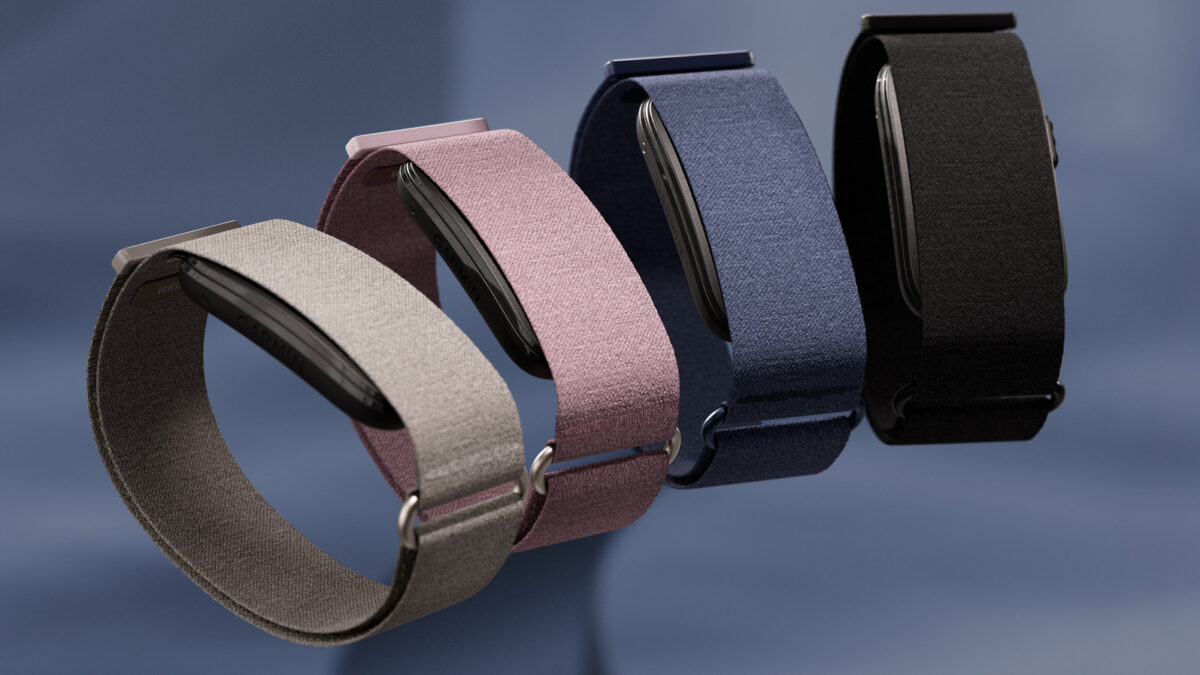
Garmin has finally stepped into the screenless fitness tracker race. On July 21, 2026 the company unveiled the Cirqa Smart Band, its first wearable with no display at all — a $200 band that quietly tracks your health and exercise and pushes the numbers to your phone instead of your wrist. It is the clearest signal yet that the “less screen, more signal” philosophy Whoop pioneered and Google echoed with Fitbit Air has gone mainstream among the biggest names in GPS and training hardware. (Engadget’s hands-on report details the launch)
A band, not a watch
The Cirqa is deliberately minimal. There is no touchscreen, no always-on readout, nothing to glance at mid-run. Instead you get a single button on the side that cycles through the activities you care about, and the band does the rest. You can wear it on the wrist or, like many screen-free competitors, as an armband, which some runners prefer for comfort. Garmin says the battery lasts about 10 days, a figure that puts it in the same league as Whoop’s multi-day band rather than a daily-charge smartwatch. At launch it ships in five colors — Citron Gray, Mauve, French Gray, Dark Olive, and Captain Blue — and two strap sizes. (Garmin’s official announcement outlines the full spec sheet)
What it actually tracks
Strip away the marketing and the Cirqa is a serious sensor package. It auto-detects and records more than 80 activities, from walking and running to yoga, and logs the daily basics — steps, sleep, and calories burned — without you starting a workout. The health metrics are where it leans on Garmin’s strengths: continuous heart rate, blood oxygen (SpO2), stress, and skin temperature, plus a recovery-time estimate that tells you how ready your body is for the next session. All of it lands in the Garmin Connect app, the same hub millions of Fenix and Forerunner owners already use.
One quietly useful detail is Connected GPS. The band has no GPS chip of its own, but it piggybacks on the GPS signal of a paired iPhone or Android phone to map routes. That keeps the hardware cheap and the battery long, at the cost of needing your phone along for outdoor track mapping.
The subscription question
Screenless trackers live or die on their business model, and this is where Garmin tries to differentiate. Whoop built its entire brand around a mandatory membership; Garmin is doing the opposite. Core tracking — steps, sleep, heart rate, SpO2, stress, skin temperature, recovery time, and all 80+ activities — works with no subscription. Advanced insights and deeper analytics live behind Garmin Connect+, the company’s optional paid tier, but they are not required to get the value of the band. For anyone burned by paywalled basics elsewhere, that is a meaningful line in the sand.
Why Garmin is late but not behind
Garmin was conspicuously absent from the screen-free category even as Whoop carved out a premium niche and Google positioned Fitbit Air as the gentle, display-free alternative. The Cirqa is the answer to both. Where Whoop sells the hardware cheap and the subscription dear, Garmin sells a $200 device once and keeps the data free. Where Fitbit Air is a Google ecosystem play, the Cirqa plugs into Garmin Connect, a platform already deep with training load, sleep coaching, and race planning features.
That positioning matters because the screenless segment is no longer a curiosity. Users are increasingly aware that another glowing rectangle on the wrist competes with the very focus and sleep the device is meant to protect. A tracker that shows you nothing until you ask is an easy sell to that audience — provided the app experience is good enough.
The honest trade-offs
A screenless band is not for everyone, and Garmin is not pretending otherwise. The obvious limitation is that you cannot see your pace, heart rate, or lap split in the moment without reaching for your phone. For interval work or navigation that is a real constraint; for all-day health logging it is irrelevant. At $200 the Cirqa is also pricier up front than a subsidized Whoop, though the lack of a recurring fee narrows that gap within a year or two of ownership.
The other caveat is ecosystem lock-in. Recovery scores, SpO2 trends, and sleep coaching are most useful inside Garmin Connect, so the Cirqa rewards people already in (or willing to join) the Garmin world more than those who want their data ported everywhere.
Bottom line
The Cirqa is Garmin doing what Garmin does best: shipping a durable, sensor-rich fitness device and refusing to ransom the core experience behind a subscription. At $200 with 10-day battery life and 80+ tracked activities, it is a credible challenger to Whoop and Fitbit Air for anyone who wants their metrics without another screen. It is available now — the only question left is whether a band with no display is the wearable you actually wanted.
