
JetBrains users running GitHub Copilot no longer have to re-explain their project at the start of every chat. GitHub said Copilot memory can now retain and recall information across agent chat sessions in the JetBrains plugin, and that developers control it with a Copilot Memory toggle in the Copilot settings portal, according to the GitHub Changelog entry.
The same release adds Ollama as a bring-your-own-key provider inside the IDE. GitHub said the integration covers provider configuration and model selection throughout the JetBrains experience, which gives teams a route to run models on their own hardware instead of routing every request to a hosted endpoint, per the changelog. For developers who already keep local weights on a workstation, that removes a workflow gap between the terminal and the editor.
What memory actually stores
Memory is not a free-form transcript. GitHub’s documentation describes two categories: repository-level facts such as coding conventions, architectural decisions, build commands, and project rules, and user-level preferences that apply only to that user across repositories. The docs also note the feature is in public preview and that on Copilot Business and Copilot Enterprise plans, user-level preferences can be viewed and deleted by an organization or enterprise administrator, as stated in GitHub’s Copilot Memory documentation.
Facts learned by one Copilot surface can be reused by another. GitHub’s docs give the example of the cloud agent discovering how a repository handles database connections, with Copilot code review later applying that knowledge to flag inconsistent patterns in a pull request.
Controls for administrators
Alongside the developer-facing changes, GitHub expanded enterprise managed settings so administrators can push server-based configuration to clients. Those settings cover plugin availability, MCP server access, permission bypass behavior, and OpenTelemetry configuration. GitHub’s documentation lists JetBrains IDEs among the supported clients and recommends piloting on a small device group before broad deployment, and it notes that for most supported keys the managed-settings.json value takes precedence over a user’s local file-based configuration, according to GitHub’s enterprise managed settings guide.
The release also touches Codex workflows, which now appear in agent debug logs and support updated permission modes plus customization through instructions and skills. Copilot CLI can install itself automatically from integrated terminals on macOS, Linux, and Windows, and user-facing strings drop the “Copilot CLI” label in favor of “Copilot.” GitHub listed reliability fixes for MCP execution and approvals, terminal output and auto-approval, cloud agents, and diff-based editing, plus corrected ANSI escape rendering and steadier terminal scrollbars.
Why it matters
Two of these changes pull in opposite directions, and that is the interesting part. Memory makes Copilot more useful the longer it sits in a codebase, but it also means the assistant is accumulating durable statements about your repository that an administrator may later need to audit. BYOK support for Ollama moves inference the other way, toward hardware the team controls. Shops with strict data-handling rules now have both a new thing to govern and a new lever for governing it.
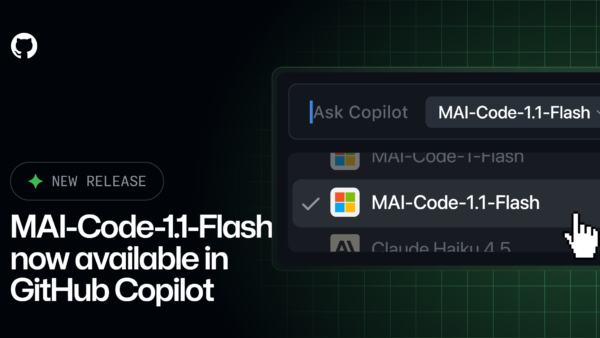
For practical adoption, the memory toggle and the enterprise settings path are the two places to look first. Teams that have been tracking Copilot’s model-side changes will recognize the pattern from Microsoft’s MAI-Code-1.1-Flash arriving in GitHub Copilot: capability lands in the client, and the configuration surface grows to match. Anyone testing the JetBrains build can file behavior reports in the copilot-intellij-feedback issue tracker.