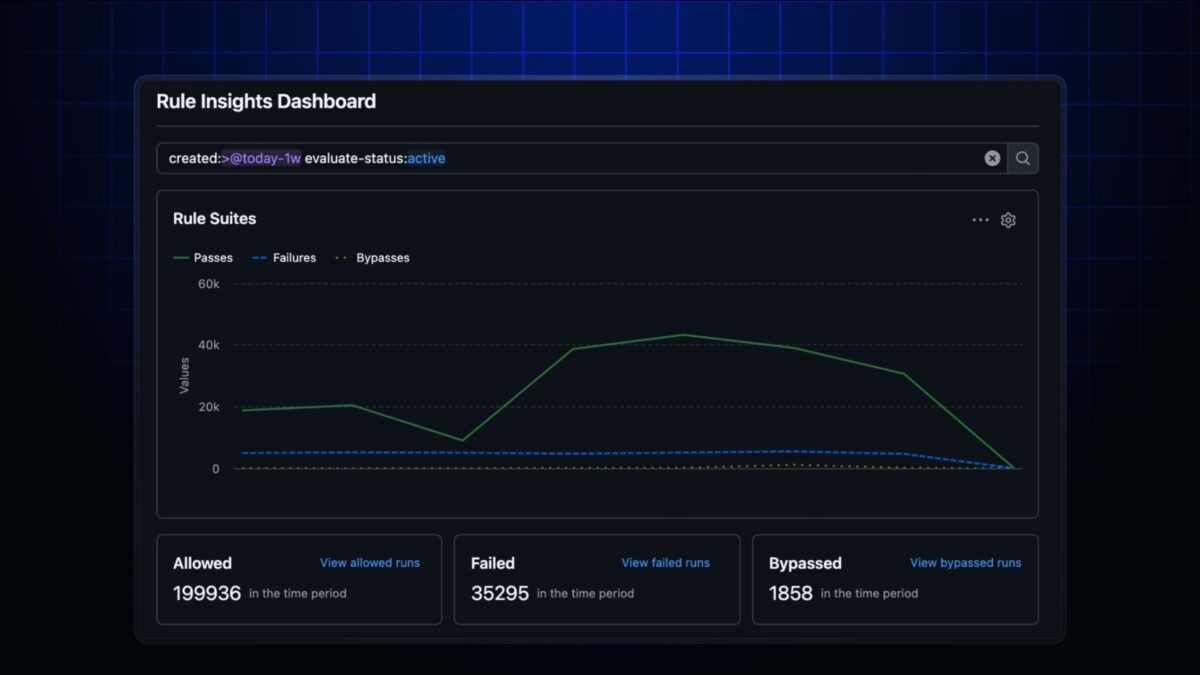
GitHub has opened a new organization-level dashboard that shows how repository
rulesets are evaluated and enforced across every repo in a company, not just one
project at a time. The feature, called rule insights, entered public preview on
August 12, 2026, according to GitHub’s changelog.
Previously, teams could only see these governance signals at the individual
repository level. GitHub first shipped that repository-level dashboard in April
2026, as the company described when it launched the unified filter bar.
The new org-level view extends that single-repo capability to the entire
organization from one screen.
For governance and compliance staff, the practical change is that reporting no
longer means opening each repository’s settings by hand. In an organization’s
Settings > Repository tab, the aggregated view surfaces rule evaluation activity
spanning all repositories at once per GitHub’s changelog.
Inside the dashboard, teams can review aggregated rule evaluation metrics for
every repository in the organization, and they can rank which repositories
generated the most bypasses so reviewers focus where it matters most per
GitHub’s changelog.
Filters let users narrow results by evaluation status, branch, ruleset, and date
range, and the data can be exported to CSV for audit records and reporting.
Repository rulesets themselves let owners control how people interact with
branches and tags — such as requiring signed commits or blocking force pushes —
across public and private repositories on GitHub’s paid and free plans per
GitHub’s ruleset documentation.
The org-wide insights layer sits on top of that foundation, aimed at
administrators who need a portfolio view rather than a per-repo one.
GitHub says the dashboard helps during incidents and audits: reviewers can spot
trends at a glance, such as a spike in blocked pushes, then drill into details
when needed per GitHub’s changelog.
Organizations already tightening their collaboration surface elsewhere can
compare notes with GitHub’s recent moves, including letting maintainers block
spammers in comments (zBrandco coverage)
and restructuring its bug bounty into VIP and public tiers (zBrandco coverage).