
Bottom line: Public tooling and chained reconnaissance can move from default IIS splash page to source-code disclosure in under an hour — but scope documents, not technical feasibility, define the legal line.
TL;DR: A published bug-bounty methodology demonstrates how attackers chain Shodan queries, HTTP/1.0 header leaks, and IIS tilde short-name enumeration to extract internal IPs, source code, and credentials — techniques that can cross into unauthorized access if scope isn’t strictly enforced.
IIS Exploitation: The blue screen that isn’t a dead end
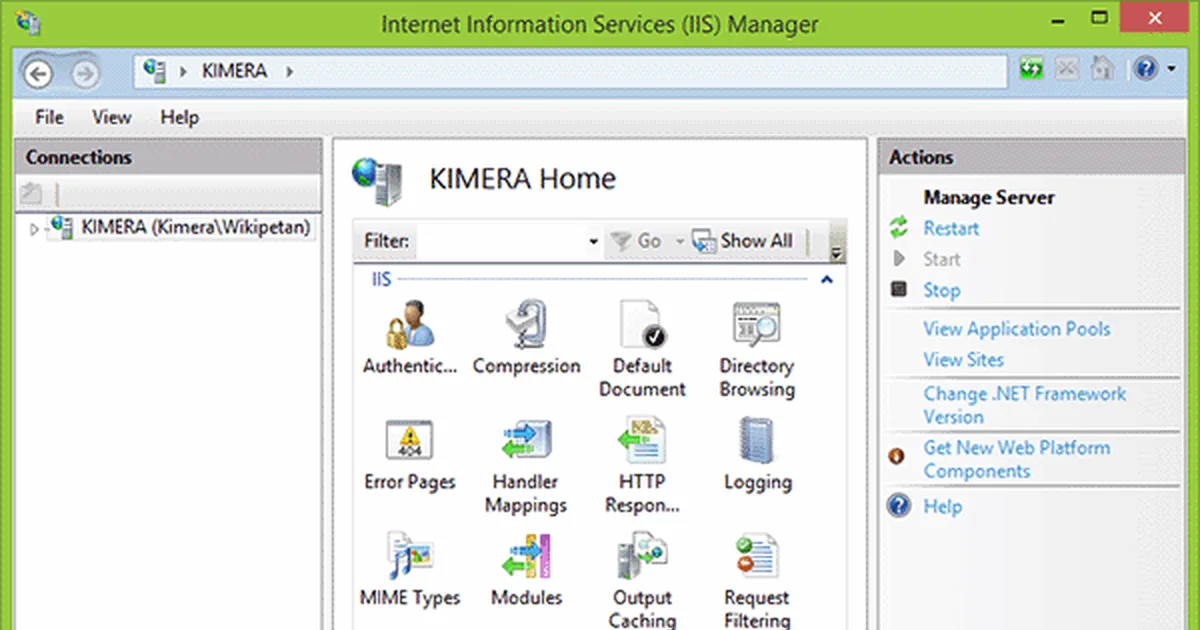
When an IIS default page appears, most scanners move on. The author of a March 2026 technical walkthrough argues that splash screen is the starting signal for one of the internet’s most consistently misconfigured web servers Humiliating IIS servers for fun and jail time.
The piece maps a full kill chain: discovery → fingerprinting → information disclosure → configuration theft → authentication bypass. Each step uses only standard tooling — curl, nuclei, ffuf, crunch — and public indexes like Shodan, Censys, and Google.

Discovery at scale
Before sending a packet to a target, the workflow queries Shodan for SSL certificates and HTTP titles tied to an organization:
ssl:"target.com" http.title:"IIS"
org:"target" http.title:"IIS"
Google dorks then surface indexed ASP.NET artifacts:
| Dork | Signal |
|---|---|
site:target.com intitle:"IIS Windows Server" |
Default landing pages |
site:target.com inurl:aspnet_client |
Static resource folder |
site:target.com ext:aspx \| ext:ashx \| ext:asmx |
ASP.NET endpoints |
site:*.*.target.com intitle:"IIS" |
Nested dev/staging hosts |
Stacked wildcards (*.*.target.com) repeatedly uncover forgotten staging boxes that single-level enumeration misses Humiliating IIS servers for fun and jail time. For a deeper dive on safe discovery workflows, see our web reconnaissance cheatsheet.
Fingerprinting without noise
A raw TCP request reveals the Server and X-Powered-By headers instantly:
openssl s_client -connect target.com:443 < /dev/null 2>/dev/null | head -30
Typical output:
Server: Microsoft-IIS/10.0
X-Powered-By: ASP.NET
For bulk collection, httpx filters thousands of hosts in seconds:
httpx -l targets.txt -td | grep IIS | tee iis-targets.txt
The HTTP/1.0 internal IP leak
Sending HTTP/1.0 (not 1.1) to Exchange or OWA front ends often returns a Location header containing a private RFC 1918 address and an X-FEServer hostname:
HTTP/1.1 302 Moved Temporarily
Location: https://192.168.5.237/owa/
Server: Microsoft-IIS/10.0
X-FEServer: NHEXCHANGE2016
That single response hands defenders (or attackers) an internal network map and a named Exchange host Humiliating IIS servers for fun and jail time.
HTTPAPI 2.0: virtual-host pivot
A generic HTTPAPI 2.0 404 doesn’t mean “nothing here.” It means the Host header didn’t match a bound site. Two pivots work:
- Certificate SAN extraction — pull the TLS cert, read Subject Alternative Names, retry with each hostname.
- Virtual-host brute-force —
ffuf -w vhosts.txt -H "Host: FUZZ.target.com" -u https://target.ip.
Tilde enumeration: the gift that keeps giving
IIS preserves 8.3 short names (WEBINF~1, WEB.CON~1) for legacy compatibility. Requesting ~/ or ~1* triggers directory listings that expose:
web.config(connection strings, machine keys)bin/DLLs (source via decompilation)- Backup archives (
backup.zip,old.rar)
Automation paths the author documents:
| Method | Tooling | Speed |
|---|---|---|
| LLM-assisted GitHub dorks | Custom prompts + GitHub Search API | Minutes per repo |
| BigQuery short-name resolution | Public GitHub dataset SQL | Seconds per org |
| Crunch brute-force | crunch 6 6 -t @@@@@~ |
Hours per target |
Each resolved short name is a direct path to source disclosure without triggering WAF rules that block web.config Humiliating IIS servers for fun and jail time.
Post-disclosure escalation
With web.config in hand, the chain continues:
- Machine key extraction → ViewState forgery → RCE via
ObjectStateFormatter - Connection strings → SQL authentication →
xp_cmdshellif privileged - Cookieless session IDs in URL → session fixation / hijacking
- Reverse-proxy path confusion (
/app//../admin) → auth bypass - NTFS alternate data streams (
file.aspx:$DATA) → static file handler bypass - HPP (HTTP Parameter Pollution) → WAF evasion on file-upload endpoints
Legal boundary: where research becomes intrusion
The article’s title — “for fun and jail time” — is not hyperbole. Every technique described is passive or semi-passive until the tester:
- Sends a crafted
Hostheader to a production IP not in scope - Downloads
web.configfrom a non-authorized host - Uses extracted credentials to pivot laterally
Bug-bounty programs define scope by domain, not by IP. An Exchange server sharing an IP with an in-scope web app is out of scope unless explicitly listed. The internal IP leak via HTTP/1.0 does not grant permission to scan that internal host.
Defenders should note that the chaining of these techniques creates a compound risk that exceeds the sum of individual vulnerabilities. When an attacker combines Shodan reconnaissance with HTTP/1.0 header leaks and tilde enumeration, they can map an entire IIS estate and extract configuration secrets in a single automated run. This means that patch management alone is insufficient; organizations must also enforce network segmentation, header hygiene, and continuous monitoring of anomalous Host-header variations to break the kill chain at multiple points.
- Network segmentation isolates Exchange front ends from internal assets.
- Header hygiene removes
ServerandX-Powered-Bytokens at the edge. - Host-header monitoring alerts on rapid variations from a single source IP.
Practical takeaway for defenders
| Detection | Mitigation |
|---|---|
Server: Microsoft-IIS in external headers |
Remove/obfuscate via web.config system.webServer/httpProtocol/customHeaders |
HTTP/1.0 Location leaks private IPs |
Enforce HTTP/1.1; strip Location on front-end proxies |
Tilde enumeration (/~1*) returns 200 |
Disable 8.3 names: fsutil 8dot3name set 1; block ~ in request filtering |
web.config accessible via short name |
Deny *.config in requestFiltering/fileExtensions; move secrets to Azure Key Vault / AWS Secrets Manager |
| Virtual-host brute-force on HTTPAPI 404 | Require valid Host header; return 404 for unknown hosts without revealing HTTPAPI |
Builder’s checklist — concrete steps to harden IIS today:
– Strip server headers in web.config or via URL Rewrite.
– Enforce HTTP/1.1
Editorial note: Citation cleanup: we trimmed duplicate citation links that repeated the same source after multiple paragraphs. Every fact and quote is unchanged; the source remains cited where each claim appears.