
Microsoft cuts datacenter water intensity while scaling for cloud and AI growth by nearly 90% over two decades, per a June 24 company blog post outlining its long-term water stewardship progress. The update coincides with the tech giant hitting a key early milestone for its 2030 water positive commitment.
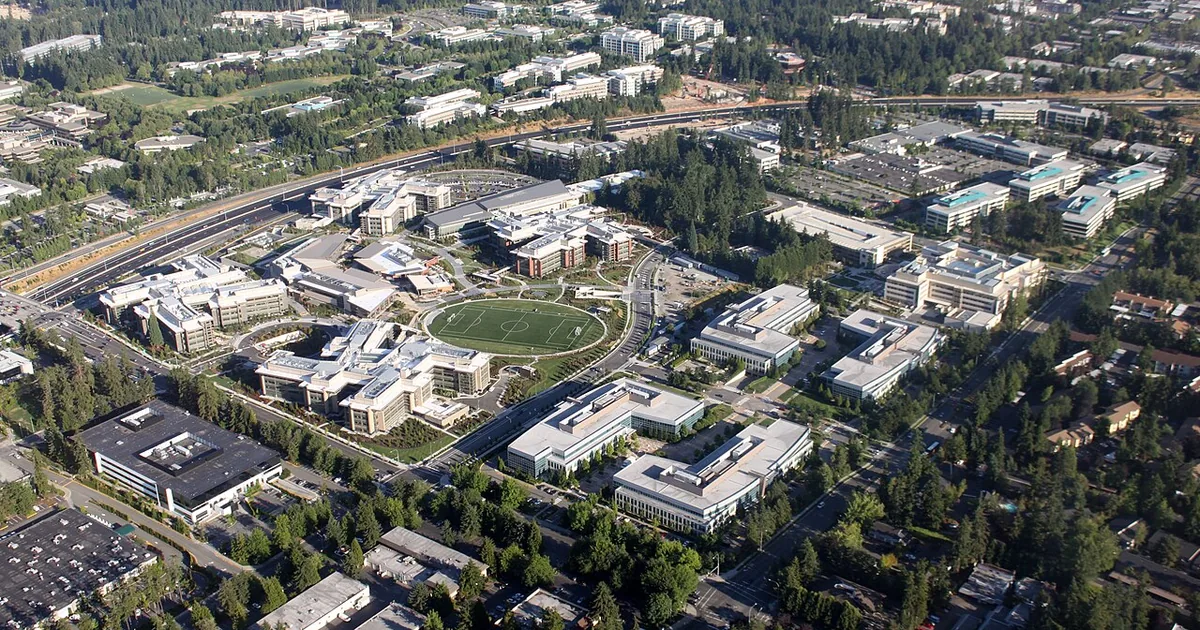
Image: Microsoft datacenter exterior cooling infrastructure — public domain via Wikimedia Commons
Water efficiency gains tied to cooling upgrades and operational controls
Microsoft’s two-decade WUE improvement is not limited to new builds. The company has progressively rolled out cooling upgrades across existing datacenters, optimized setpoints to eliminate overcooling, and added live audits against design baselines using weather data and operational analytics. These measures produced a 23% year-over-year WUE improvement in its Phoenix, Arizona facilities during FY25 alone, according to Microsoft’s disclosed figures.
Regional differences explain why some sites can cut water use more aggressively than others. Northern European datacenters require no cooling water year-round; Dublin and Amsterdam sites use water less than 5% of the time. Temperate regions such as Virginia use water roughly 10% of the year, while Phoenix can require evaporative cooling for up to 40% of peak summer hours.
The combination of regional climate matching, upgraded cooling architectures, and real-time control systems is what allowed roughly 90% of Microsoft’s owned fleet to run on low- or zero-water cooling systems by 2025.
Zero-water AI datacenter design targets future growth
To support surging AI workload demand and the new datacenter construction it is driving, Microsoft added a 2024 zero-water AI datacenter design to its sustainability roadmap. The system uses a closed-loop, direct-to-chip liquid cooling setup that recirculates water without evaporation, eliminating evaporative water loss entirely while delivering precise zonal temperature control for high-density GPU and AI accelerator racks.
As the company expands its fleet, these zero-water designs will drive further reductions in overall water intensity even as total capacity scales. Microsoft says the design is a core part of its Community-First AI Infrastructure initiative, which prioritizes sustainable infrastructure growth in regions with high datacenter deployment. The FY25 water-positive milestone, in which Microsoft replenished more water globally than it withdrew for operations, is intended to demonstrate the company remains on track toward its 2030 target of sustained water-positive performance.
Bottom line: For cloud operators, Microsoft’s two-decade WUE improvement offers a replicable blueprint for scaling AI infrastructure in water-stressed regions.
The 2024 zero-water AI datacenter design uses direct-to-chip closed-loop liquid cooling to eliminate evaporative water loss even as GPU density rises. FY25’s water-positive milestone indicates the company is still on track toward sustained water-positive performance by 2030.
Image: Microsoft official water stewardship and AI datacenter sustainability disclosures — insights from Microsoft official blog
Cooling overhauls cut water intensity while scaling for growth
The reduction is rooted in early design choices that prioritized water efficiency without sacrificing performance. As early as 2008, Microsoft adopted direct air cooling with evaporative assist as its primary datacenter cooling approach, a system that uses up to 90% less water than traditional year-round evaporative cooling towers by only activating when ambient temperatures exceed 85°F (29.4°C).
Regional climate variation drives further efficiency gains: Northern European datacenters require no cooling water year-round, while cooler climates including Dublin and Amsterdam use water less than 5% of the time, temperate regions like Virginia 10% of the year, and hot climates including Phoenix up to 40% of the time. As a result, roughly 90% of Microsoft’s 2025 owned datacenter fleet runs on low- to zero-water cooling systems, per the company’s official sustainability disclosure.
Zero-water AI datacenter design targets future scaling needs
To support surging AI workload demand driving new datacenter construction, Microsoft launched a 2024 datacenter design optimized for AI infrastructure that uses zero water for cooling during operations. The system uses a closed-loop, direct-to-chip liquid cooling setup that recirculates water without evaporation to deliver precise zonal temperature control for high-density GPU and AI accelerator racks, eliminating evaporative water loss entirely.
As the company expands its fleet to support growing cloud and AI services, these zero-water designs will drive further reductions in overall water intensity, even as total datacenter capacity scales. Per the official Microsoft sustainability disclosure, the design is a core part of its Community-First AI Infrastructure initiative, which prioritizes sustainable infrastructure growth in regions with high datacenter deployment.
Operational upgrades deliver double-digit gains for existing fleets
For existing datacenters that still rely on evaporative cooling, Microsoft has rolled out operational upgrades to cut unnecessary water use. The company continuously optimizes temperature and humidity setpoints to eliminate overcooling, and audits real-time water use against design baselines using live weather data and operational analytics to catch performance gaps or anomalies quickly.
In its Phoenix, Arizona datacenters, these changes delivered a 23% year-over-year improvement in WUE in FY25 alone, with rollouts to all direct-evaporatively cooled global fleets currently underway. Per the company’s official update, the Phoenix case study offers a replicable blueprint for cutting water use in hot, arid regions where evaporative cooling is most common.
Bottom line: Microsoft’s two-decade track record of decoupling datacenter expansion from water use gives cloud operators a proven, replicable blueprint for scaling AI infrastructure in water-stressed regions, with its 2024 zero-water AI datacenter design set to accelerate intensity reductions as the fleet grows, and its FY25 water positive milestone demonstrating the 2030 target remains on track.
Editorial note: Citation cleanup: we trimmed duplicate citation links that repeated the same source after multiple paragraphs. Every fact and quote is unchanged; the source remains cited where each claim appears.