
For most of the history of the mobile phone, “no signal” meant “no help.” If you broke down on a remote road, twisted an ankle on a trail, or got caught out at sea, your phone was a brick the moment it lost the cell towers. That assumption is now quietly dissolving. A generation of phones — starting with the iPhone 14 in 2022 and now spanning Google’s Pixels and Samsung’s Galaxies — can reach emergency services by talking directly to satellites, with no cellular or Wi-Fi connection at all. The feature is called Emergency SOS via satellite, or simply satellite SOS, and in 2026 it is mainstream rather than novel. The interesting question is not whether your phone can do it, but whether you are the person it is actually built for.
How phone-to-satellite texting works
A normal call or text rides on a dense grid of cell towers. Satellite SOS instead connects your phone to a constellation of satellites in low Earth orbit (LEO) — the same kind of orbit used by satellite phones. The phone’s modem is tuned to find a satellite passing overhead, aim a narrow connection at it, and exchange short text messages. Because the satellites move and the link is thin, the connection is text-only and low-bandwidth; you are not streaming video or making a voice call. You also generally need a clear view of the sky — trees, canyon walls, and building interiors block the signal (Globalstar, Wikipedia).
The phones do the aiming for you. On an iPhone, the interface walks you through pointing the device at the satellite; on recent Pixels, the same idea applies. The exchange is typically a short questionnaire — what happened, how many people, what injuries — relayed to a relay center that contacts local emergency services.
Who actually ships it
The capability has spread across the major platforms:
- Apple. The iPhone 14, launched on 16 September 2022, was the first mainstream phone with satellite connectivity for contacting emergency services; later models extended it and added the ability to send iMessages and SMS via satellite when you are simply out of coverage (iPhone 14, Wikipedia).
- Google. The Pixel 9, released in 2024, lets owners on Verizon in the US text from anywhere outside network reach via satellite (Pixel 9, Wikipedia).
- Samsung. The Galaxy S25 generation brought satellite SOS messaging to Samsung’s flagship line in 2025.
Behind several of these sits Globalstar, a US operator running a LEO constellation for satellite voice and low-speed data. In a sign of how strategic this layer has become, Amazon announced in April 2026 an agreement to acquire Globalstar and fold it into its Amazon Leo satellite unit, with the deal expected to close in 2027 (Globalstar, Wikipedia).
Who it is really for
Satellite SOS is built for a specific situation: you are off the cellular map and something has gone wrong. That describes hikers, backcountry skiers, kayakers, and road-trippers through rural stretches far more than it describes someone in a city. If your phone already shows bars, the feature stays idle — you do not need it, and it does not replace normal calling.
It is also a safety net rather than a communication tool. You are not going to chat with friends over satellite; the bandwidth and the sky-aiming ritual make that impractical. What it gives you is a lifeline: a way to summon help when the alternative is waiting for a passerby who may not come.
What to do in the first minute
If you ever trigger it: stay where you have the clearest sky, follow the on-screen pointing, and answer the questions plainly. Rescuers prioritize by the information you provide, and a vague “I’m hurt” slows them down far more than a precise “right ankle, can’t walk, two miles north of the trailhead.” Keep the phone still while it connects — moving it breaks the narrow link.
Satellite SOS vs. a satellite phone
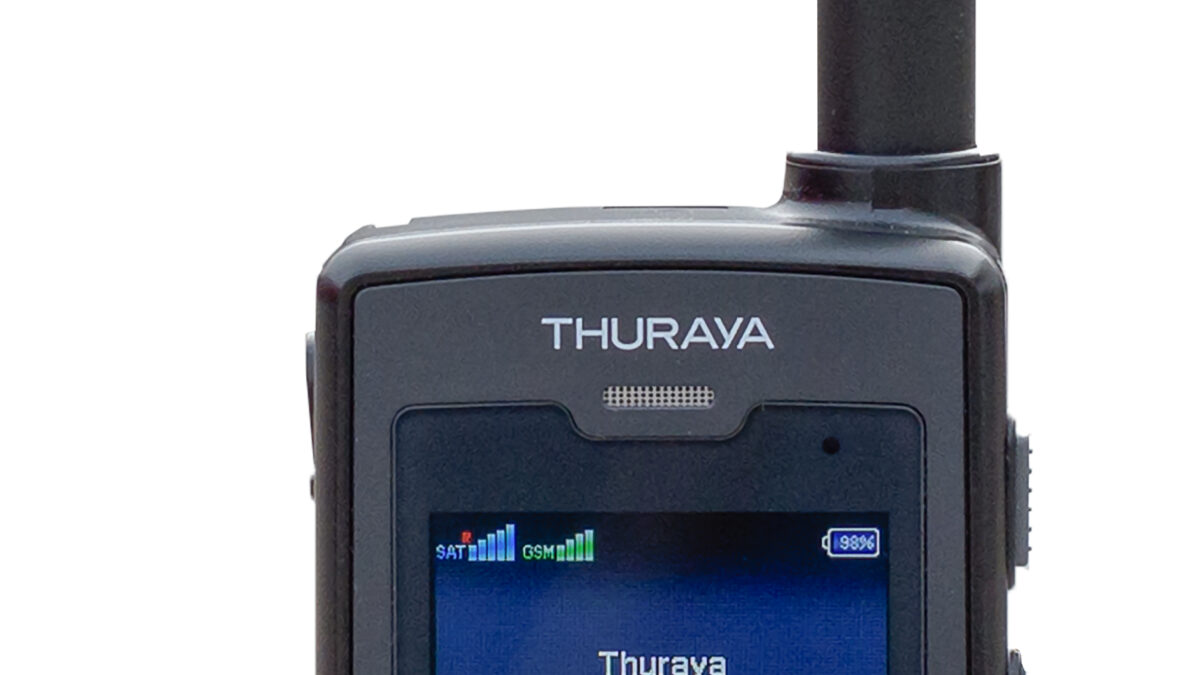
A dedicated satellite phone — the chunky handsets used by expeditions — does more: voice calls and broader coverage, often for a higher price and a bulkier device (Satellite phone, Wikipedia). Phone-to-satellite SOS is the lightweight, built-in version: narrower in scope, but it rides in your pocket and costs nothing extra until the free period ends. For most people, the built-in version covers the realistic risk.
Privacy: who reads your message
The distress messages route through a relay center to emergency dispatchers; they are not broadcast publicly, and they are not a casual text your carrier reads for marketing. Still, it is an emergency channel, and the system is designed around genuine emergencies, not “I’m running late.”
The cost question
Expect a free window — commonly a couple of years bundled with a new device — after which the maker charges a subscription. The price is modest compared with the cost of a dedicated satellite phone or a rescue. If you rely on it, note when the free period ends and decide whether to keep paying.
Where it stops being useful
Three limits are worth being honest about. First, the clear-sky requirement means it fails inside vehicles, dense forest, or deep canyons — often exactly where you might need it. Second, it is text-only; there is no voice, and messages can take longer than you expect. Third, availability and cost vary. Some makers bundled a few free years of satellite SOS with a new phone, after which it becomes a paid service; coverage depends on which satellites and which countries are supported.
A practical way to think about it
Treat satellite SOS like a seatbelt or a smoke detector: you hope you never use it, and its value is concentrated in the rare, bad day. If you regularly spend time where cell coverage is spotty — trails, coastlines, rural highways — it is a genuine reason to prefer a phone that has it. If you live and work where towers are everywhere, it is a nice insurance policy you will probably never claim.
The smarter habit is to set it up before you need it. Phones prompt you to practice the satellite connection in a tutorial, and many let you share your location with contacts even when you are merely out of range. Doing the practice run in your driveway beats fumbling through it on a dark, cold mountainside.
The bottom line
Phone-to-satellite SOS is one of the quietest but most meaningful shifts in consumer tech this decade: a feature that turns a useless brick-with-no-signal into a functioning distress beacon. It is not for everyone, and it is not a replacement for signal. But for the people who go where the towers don’t, it is the difference between being stranded and being found.