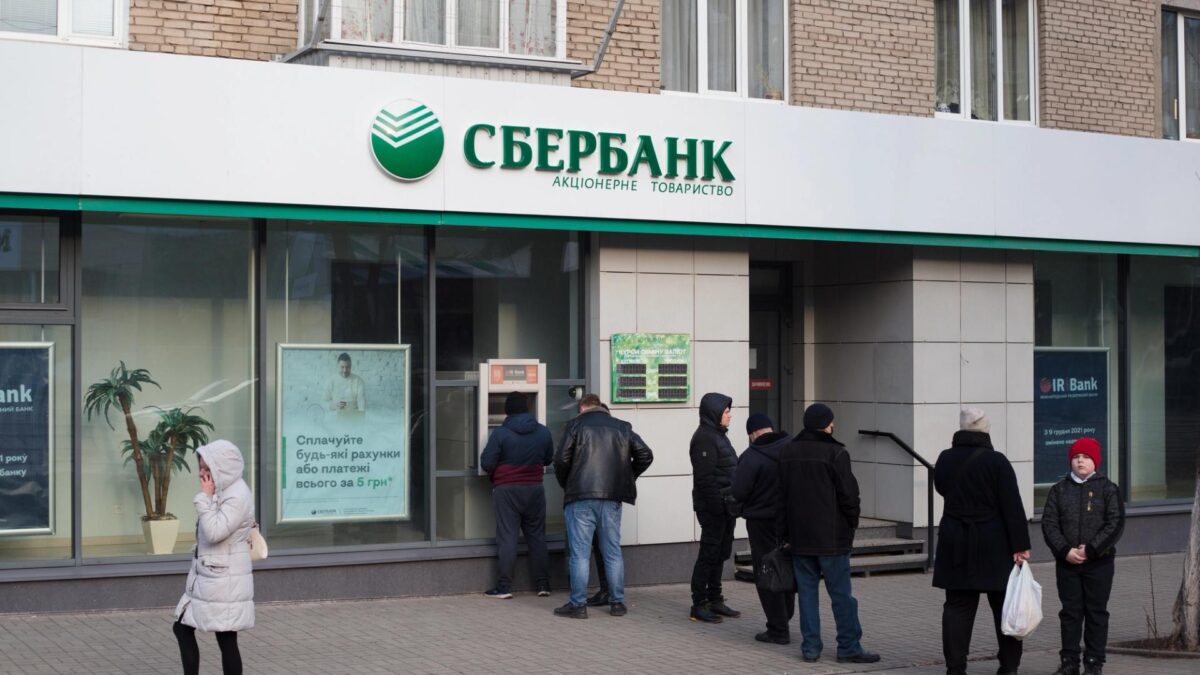
Russia’s biggest bank just put a date on its crypto ambitions. Sberbank plans to build cryptocurrency trading infrastructure — including a “digital depository” that tracks who owns what — no later than December 1, according to CoinDesk, citing Interfax. The announcement lands weeks before Russia’s first comprehensive crypto-market law takes effect on September 1, and it tells you a lot about what “regulated crypto” will actually look like there: state-bank ledgers first, blockchains second.
The most revealing detail is the depository itself. Per Interfax’s reporting, it will record clients’ cryptocurrency ownership and process most transactions off the underlying blockchain, with Sberbank operating “active wallets” for client-initiated deposits, withdrawals and transfers. Alexander Vedyakhin, first deputy chairman of Sberbank’s management board, described the depository as the key element of the new infrastructure — one that “will maintain records of clients’ cryptocurrency rights and account for transactions outside the main blockchain.”
If that architecture sounds familiar, it should. It is essentially the omnibus-custody model traditional finance has used for securities for decades: the institution holds the assets, an internal ledger tracks entitlements, and on-chain settlement happens only at the edges. For a bank that already offered qualified investors bitcoin-linked structured bonds and ran a bitcoin-backed lending pilot with miner Intelion Data last December, it’s the logical next step — crypto exposure without ceding the ledger.
The law that makes this possible — and its very high bar
Sberbank’s timeline is pegged to Russia’s new licensing framework. The Federation Council approved a law routing crypto trading, custody and settlement through licensed brokers, exchanges, asset managers and depositories. The framework takes effect September 1, 2026, though the requirement that transactions actually pass through licensed intermediaries only applies from July 2027 — a ten-month runway for institutions like Sberbank to stand up the plumbing.
The Bank of Russia gets broad oversight, including the power to decide which assets qualify for public trading. And the thresholds are brutal: an average market capitalization above 5 trillion rubles (about $64 billion) and average daily volume above 1 trillion rubles (roughly $12.8 billion), both measured over two years. Read that list against the market and it is effectively bitcoin, ether, and little else. Qualified investors get access to a broader menu; retail traders get the shortlist. Crypto payments for goods and services inside Russia remain prohibited — this is an investment regime, not a payments one.
The uncomfortable timing
Moscow is standing up regulated crypto rails at the exact moment the West is trying to cut Russia’s crypto channels off. The European Union last week added the exchange HTX (formerly Huobi Global) to its sanctions list among 18 entities accused of frustrating the bloc’s prohibitions on providing crypto services to Russia — part of the EU’s broader sanctions framework adopted after Russia’s invasion of Ukraine, which explicitly restricts crypto-asset services.
That collision course is the real story. A fully domestic stack — state-controlled bank, Bank of Russia-approved asset list, off-chain internal settlement — is far harder to sanction than offshore exchanges are, because there is almost nothing external to sanction. Transactions recorded inside Sberbank’s depository never touch a public mempool. Western analytics firms can trace on-chain flows; they cannot trace a Russian bank’s internal ledger.
For traders outside Russia, the practical takeaway is narrower but still worth watching: a G20-scale economy is about to route crypto ownership through a single systemically important bank, with most settlement happening off-chain. If the December 1 target holds, 2027 — when the licensed-intermediary requirement bites — will be the first real test of whether “crypto” inside a closed banking perimeter still behaves like crypto at all, or just becomes another line item in a depository account.
The pieces have been assembling for a while: the 2024 law legalizing mining and creating an experimental cross-border settlement regime, the central bank’s 2025 move allowing qualified investors into crypto-linked products, a proposed 300,000-ruble annual cap for retail purchases per intermediary. December’s launch is where the experiment stops being incremental.