
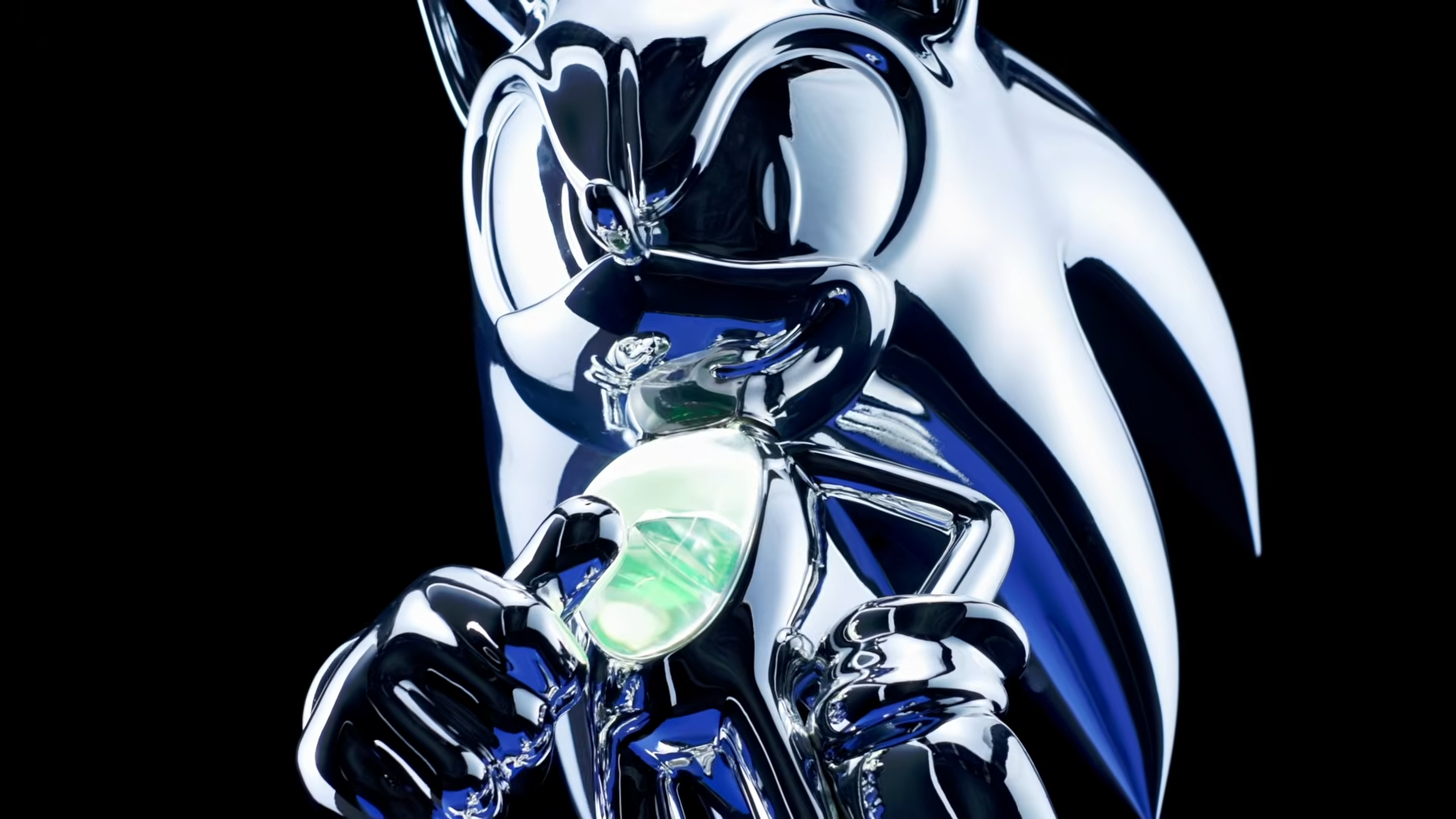
Bottom line: Sega’s 35th-anniversary centerpiece is a life-sized Sonic statue the company claims contains the character’s “DNA” — a marketing claim with no published sequencing data, vendor disclosure, or independent verification.
The Statue That Claims a Genome
Sega’s 35th-anniversary celebration for Sonic the Hedgehog includes a centerpiece that sounds like a writing prompt: a life-sized figure the publisher says contains Sonic’s DNA. The announcement arrives alongside a wave of franchise retrospectives, but this particular artifact — part collectible, part conceptual art — forces a collision between IP mythology and material science.
PC Gamer reported the claim directly from Sega’s anniversary materials, noting the company offered no sequencing data or vendor details (https://www.pcgamer.com/gaming-industry/sega-says-it-made-a-life-sized-figure-containing-sonics-dna-and-i-have-a-few-questions/). No independent lab has verified the claim. Sega has not published a sequencing report, a chain-of-custody log, or a definition of what “Sonic’s DNA” means for a character who has existed solely as polygons, pixels, and voice lines since 1991.
What “DNA” Means for a Digital Entity
The biological implications are immediate and absurd. DNA encodes proteins; it does not encode personality traits, color palettes, or ring-collection mechanics. If the figure contains synthetic oligonucleotides, they are at best a hash — a symbolic sequence designed to represent the character, not a biological blueprint.
| Claimed Component | Biological Plausibility | Likely Implementation |
|---|---|---|
| “Sonic’s DNA” | None — fictional entity | Synthetic DNA barcode or plasmid |
| Life-sized form | Standard manufacturing | Resin, polystone, or 3D-printed polymer |
| Limited edition | Artificial scarcity | Numbered certificate of authenticity |
This is not the first time a franchise has biologized its mascot. Pokémon merchandise has included “fossil” replicas; Jurassic Park props have used amber-encased mosquitoes. But Sega’s phrasing — “containing Sonic’s DNA” — presents the material as intrinsic rather than referential.
The Collectible Market’s New Frontier
For collectors and speculators, the DNA claim introduces a novel variable: provenance via molecular tagging. If the embedded sequence is unique per unit, it could serve as an on-chain or off-chain authenticity anchor — a physical analogue to an NFT’s token ID.
Potential implications:
– Anti-counterfeit: Sequencing a micro-sample could verify origin.
– Degradation risk: DNA degrades under UV, heat, humidity — poor archival properties for a display piece.
– Legal ambiguity: Who owns the sequence? Sega? The synthesis vendor? The buyer?
No secondary market infrastructure exists for molecularly tagged collectibles. Authentication services (PSA, CGC, Beckett) do not offer DNA sequencing. The claim remains a marketing layer, not a trust layer.
Prior Art in Franchise Biology
Sega’s stunt echoes broader industry trends where biological language dresses up digital scarcity:
- Ubisoft’s “Quartz” digits (2021) framed NFTs as “energy-efficient” without publishing gas metrics (https://www.theverge.com/2021/12/7/22822467/ubisoft-quartz-nfts-ghost-recon-breakpoint-tezos).
- Square Enix’s “Symbiogenesis” (2023) used “genome” terminology for character NFT traits (https://www.polygon.com/23547884/square-enix-symbiogenesis-nft-game-ethereum).
- Bandai’s “Tamagotchi Smart” (2021) marketed “DNA data” transfer via NFC — actually JSON payloads (https://www.bandai.com/release_item/tamagotchi-smart/).
In each case, biological metaphor substitutes for technical transparency. Sega’s figure continues the pattern: a physical object granted mythic status through molecular rhetoric.
What Developers and Operators Should Track
| Signal | Why It Matters | Action Item |
|---|---|---|
| Molecular authenticity claims | New IP protection vector | Monitor USPTO filings for “DNA-marked collectible” patents |
| Collector demand for verifiable scarcity | Secondary-market differentiation | Prototype NFC + synthetic DNA tagging for limited runs |
| Regulatory scrutiny on “bio” marketing | FTC/ASA may classify as deceptive | Audit all “biological” claims in product copy |
The practical takeaway: if your roadmap includes physical-digital hybrids, molecular tagging is technically feasible today. Companies like Twist Bioscience and Catalog DNA offer custom oligo synthesis at ~$0.05/base (https://www.twistbioscience.com/, https://catalogdna.com/). But consumer trust requires open protocols — not press-release biology.
For builders exploring this space, our guide to physical-digital hybrid authentication outlines the infrastructure gaps Sega’s stunt highlights. Teams should also review FTC Green Guides compliance for gaming marketing before making biological claims.
Sega Claims Life-Sized Sonic Figure Contai: The Unanswered Questions
Sega has not disclosed:
– Sequence length and encoding scheme (ASCII? Base64? Custom codon table?)
– Synthesis vendor and quality-control metrics (error rate, purity)
– Storage buffer (dry? TE buffer? Lyophilized?)
– Extraction protocol for verification (destructive? non-destructive?)
Until those details appear, the figure is a very expensive resin statue with a very creative certificate of authenticity.
Bottom Line
Sega’s DNA-infused Sonic is a marketing milestone, not a biological breakthrough. It signals where collectible IP is heading: toward molecularly anchored provenance that blurs the line between merchandise and certificate. For builders, the lesson is clear — claims require infrastructure. A synthetic oligonucleotide is cheap; a verifiable, durable, non-destructive authentication layer is not. Sega has built the former. The industry still needs the latter.