Bottom line: A Berlin court ruled Google’s AI Overviews are a search format, not original content, dismissing a trademark suit. Days earlier, a Munich court held Google liable for AI hallucinations as independent statements. The split leaves AI search liability unresolved across Germany and signals regulatory risk for every provider deploying generative search.
What did the Berlin court decide?
A Berlin regional court ruled in early June 2026 that Google’s AI Overviews constitute a new search-result format rather than original editorial content. The court dismissed a trademark-infringement lawsuit filed by a perfume manufacturer that objected to its protected brand names appearing alongside cheaper imitations in AI Overviews. The judges found no violation because the AI merely aggregated information already published elsewhere and users understand the search engine is “pulling together information from other sources.” Crucially, the court held Google has no “decisive influence” over the specific wording of AI responses Berlin court rules Google’s AI Overviews are just a new search format, not original content.
How does the Munich ruling conflict?
Days before the Berlin decision, a Munich regional court reached the opposite conclusion in a separate defamation case. That court ruled Google’s AI had fabricated false connections between two publishers and fraudulent schemes — claims that appeared in no cited source. The Munich judges classified the AI output as independent content because Google solely controls the model, its parameters, and its deployment. They rejected the argument that users could simply verify citations, noting most users treat AI summaries as complete answers Berlin court rules Google’s AI Overviews are just a new search format, not original content.
Why does this split matter for AI search architecture?
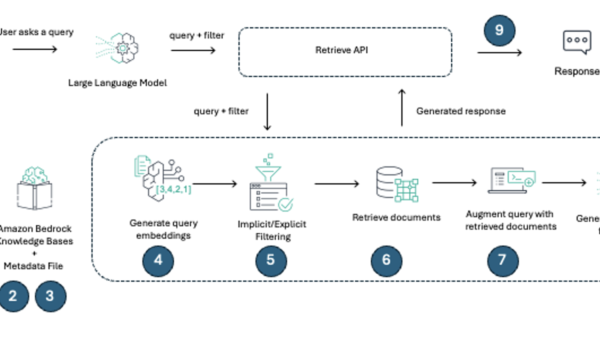
The contradictory rulings expose a fundamental ambiguity in how existing law maps to retrieval-augmented generation (RAG) systems. Berlin’s logic assumes faithful summarization of retrieved documents; Munich’s logic addresses generative drift where the model invents facts absent from sources. Both scenarios occur in production AI Overviews, Search Generative Experience, and competing products from Microsoft, Perplexity, and OpenAI Introducing the OpenAI Partner Network.
For developers and product teams building on these stacks, the rulings imply three immediate engineering priorities:
- Citation fidelity monitoring: Instrument pipelines to detect when generated text exceeds or contradicts retrieved snippets. Munich’s hallucination case makes this a liability surface.
- Attribution UI clarity: Berlin’s “users understand aggregation” finding depends on visible, clickable citations. Dark-pattern UIs that obscure sources weaken this defense.
- Model governance logs: Munich’s “sole control” language means prompt templates, system instructions, and model versions are discoverable evidence. Version-control every deployed configuration.
Industry context: platform investments outpace legal clarity
While German courts split, the platform layer is scaling rapidly. Google announced a $1.5 billion expansion of its Alabama data-center campus for 2026–2027 to support AI inference workloads Google expands Alabama data center campus, funds community efforts. OpenAI launched a $150 million Partner Network targeting 300,000 certified consultants by year-end to accelerate enterprise RAG deployments Introducing the OpenAI Partner Network. Microsoft emphasizes model-diverse, heterogeneous stacks with FinOps tooling to manage usage-driven AI costs Achieving success with AI.
These investments assume a stable liability framework that does not yet exist. The Berlin/Munich split means every EU jurisdiction could develop its own test for when a search engine becomes a publisher — a fragmentation risk for any multi-region AI search product.
Practical takeaways for builders and operators
For ML engineers: Treat citation accuracy as a production SLO, not a quality metric. Log retrieval-to-generation divergence per query; alert when generated claims lack source support.
For legal/compliance: Map jurisdiction-specific liability tests to your deployment regions. A single EU-wide Terms of Service may not survive forum-shopping if national courts diverge.
For product managers: Design fallback UX for high-risk queries (health, finance, legal) that suppresses generative summaries and surfaces verbatim snippets with explicit source links — the Berlin court’s safe harbor.
For infrastructure teams: Google’s Alabama build-out Google expands Alabama data center campus, funds community efforts and Microsoft’s model-diverse routing Achieving success with AI signal that inference capacity will not be the bottleneck. Observability and auditability will.
Verdict: Engineer for Munich; document for Berlin
The unresolved question no appeal court has answered: RAG systems are neither pure retrieval nor pure generation. They are hybrid pipelines where a retriever selects context and a generator synthesizes output under prompt constraints set by the operator. Berlin treats the hybrid as search; Munich treats the generator as author. Until a higher court — or the EU AI Act — defines the boundary, every deployer carries asymmetric risk: liable for hallucinations in Munich, shielded for aggregation in Berlin.
The earned takeaway is not “wait for clarity.” It is instrument for the stricter standard now. Build citation fidelity into your CI/CD gates. Log prompt templates and model versions as immutable artifacts. Design user-facing attribution that survives a court’s scrutiny of whether an “average user” recognizes aggregation. The liability framework will converge on the most demanding interpretation — because that is the only one that protects rights holders across borders. Engineer for Munich; document for Berlin.