TL;DR: Google will spend $1.5 billion across 2026–2027 to expand its Jackson County, Alabama data center campus. The project includes a $2 million Energy Impact Fund partnered with the Tennessee Valley Authority and the Community Action Agency of Northeast Alabama. A separate $550,000 allocation will fund STEM learning kits for local middle-school students.
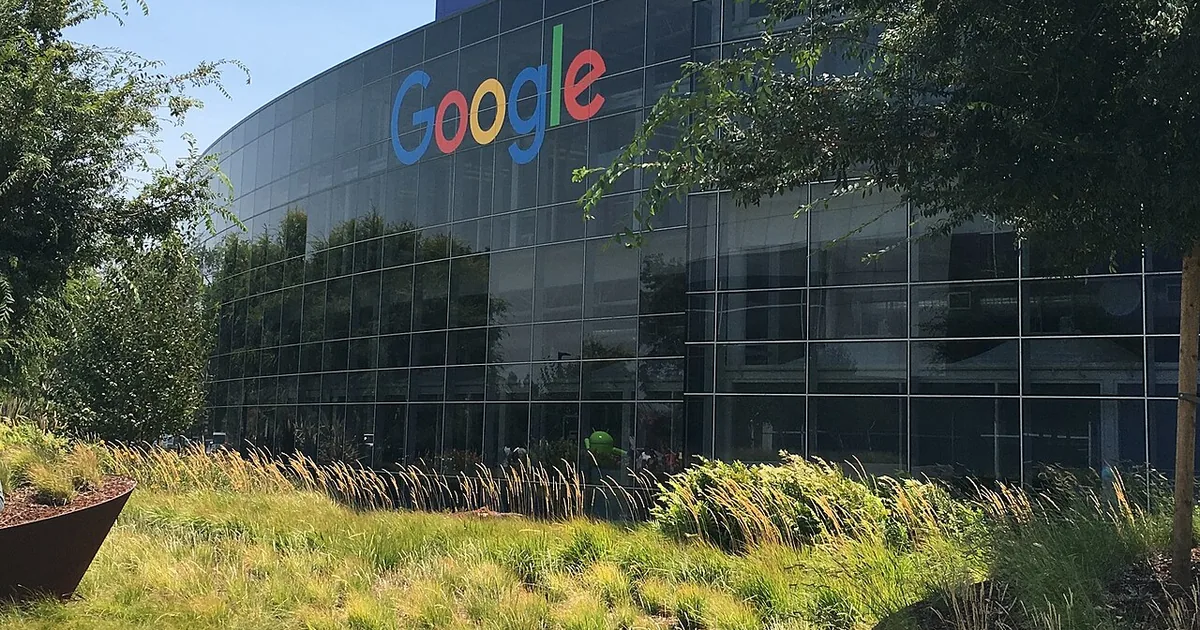
Google announced a $1.5 billion capital commitment to expand its Jackson County, Alabama data center campus during 2026 and 2027. The company confirmed it will fund 100% of its own power and infrastructure costs for the build-out. Google announces Alabama expansion
Campus expansion scope
Google’s Jackson County data center campus is the location of the announced 2026–2027 expansion. The campus delivers capacity for Google’s essential digital services. No additional technical details about the expansion’s scope were disclosed in the initial announcement. Google announces Alabama expansion
Community and energy commitments
| Commitment | Amount | Partners | Focus |
|---|---|---|---|
| Campus expansion capex | $1.5B (2026–2027) | None | Data center build-out |
| Energy Impact Fund | $2 million | Tennessee Valley Authority (TVA), Community Action Agency of Northeast Alabama (CAANEAL) | Residential weatherization and efficiency retrofits in surrounding counties |
| STEM kit donation | $550,000 | Local Jackson County schools | Hands-on learning kits for middle-school students |
The Energy Impact Fund pairs Google with the Tennessee Valley Authority and the Community Action Agency of Northeast Alabama. The fund finances residential weatherization and efficiency retrofits for households in the surrounding counties. The $550,000 STEM allocation will distribute hands-on learning kits to local middle-school students. This builds on Google’s existing digital-skills programming in the region. Google announces Alabama expansion
Industry context: competing infrastructure investment vectors
Google’s Alabama capital commitment illustrates one of three distinct infrastructure investment vectors emerging across major AI and cloud providers. For example, Google’s $1.5 billion Alabama investment focuses on physical data center expansion. OpenAI, meanwhile, is investing in pre-deployment simulation pipelines to predict model behavior at scale. Microsoft is positioning its Copilot and Agent 365 stack as a model-diverse, FinOps-native platform for enterprise AI workloads. The company specifically argues that model commoditization makes heterogeneous model routing and semantic data preparation the durable competitive advantage for its offerings. OpenAI deployment simulation Microsoft AI success blog
| Company | Primary Investment Vector | Core Mechanism | Technical Focus |
|---|---|---|---|
| Physical cloud capacity | Data center expansion with 100% self-funded power and infrastructure costs | Delivery of essential digital services | |
| OpenAI | Behavioral predictability for AI models | Deployment Simulation, which replays real production conversations through candidate models to estimate undesired-behavior rates prior to release | Frequency estimation of rare adverse model outputs, complementary to adversarial red-teaming |
| Microsoft | Enterprise AI platform abstraction | Model-diverse Copilot and Agent 365 control plane | FinOps tooling, multi-model routing to reduce single-vendor dependency |
OpenAI’s Deployment Simulation complements but does not replace adversarial red-teaming processes for model safety validation. Microsoft’s framing of model commoditization as a market reality underpins its focus on abstraction layers. These layers let enterprises route workloads across multiple model providers rather than locking into a single vendor’s model stack. OpenAI deployment simulation Microsoft AI success blog
Implications for technical teams
For cloud infrastructure teams, Google’s Alabama expansion signals ongoing investment in US Southeast cloud capacity from the provider. Google announces Alabama expansion
DevOps and FinOps teams can use this expansion as a reference point for hyperscale energy procurement models. Google is funding 100% of its own power and infrastructure costs for the build-out. Google announces Alabama expansion
AI and ML platform teams should note the diverging investment priorities across the three major providers. Google is prioritizing owned physical infrastructure and power. OpenAI is prioritizing simulation-driven safety processes to accelerate model deployment velocity. Microsoft is prioritizing platform abstraction layers that reduce dependency on any single model provider. OpenAI deployment simulation Microsoft AI success blog
Key takeaway
Google’s $1.5 billion Alabama investment is not an isolated capital outlay. It is the physical infrastructure counterpart to the simulation and platform-layer investments its peers are prioritizing. For technical teams building AI and cloud systems, this signals that capacity, safety, and platform abstraction are now separate, prioritized budget lines across the industry. Winning architectures will be designed to optimize for one or more of these layers explicitly. This is preferable to assuming a single vendor delivers best-in-class performance across all three.
Editorial note: Citation cleanup: we trimmed duplicate citation links that repeated the same source after multiple paragraphs. Every fact and quote is unchanged; the source remains cited where each claim appears.