
Housemarque has overhauled the visual effects (VFX) technology powering its PS5 shooter Saros, retiring its 12-year-old NGP particle engine in favor of a unified, GPU-accelerated Graphite framework built exclusively for PlayStation hardware. The shift consolidates three decades of the studio’s proprietary VFX tooling development into a single cohesive architecture, per an official PlayStation Blog breakdown published June 17, 20261.
Graphite Unifies 30 Years of Housemarque VFX Tooling
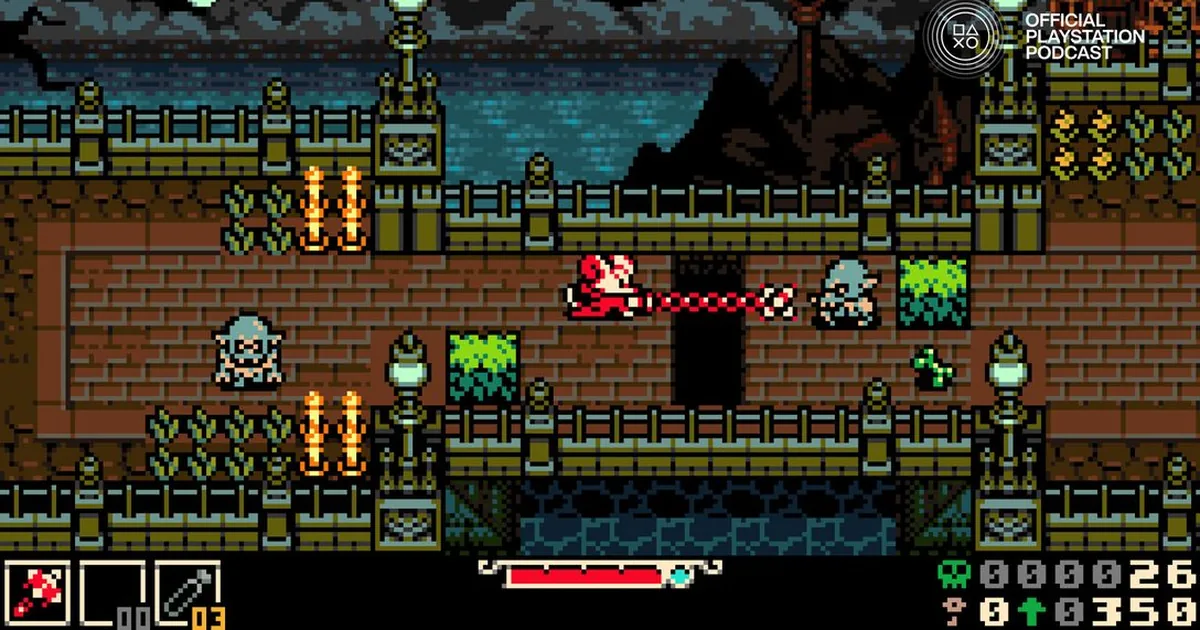
NGP (Next-Gen Particles) originated as a prototype built specifically for Housemarque’s 2013 arcade shooter Resogun. The engine received incremental, title-specific updates for every subsequent Housemarque release, accumulating more than a decade of context-specific code and design choices tailored to isolated projects. By the start of Saros development, NGP lacked a unified architecture optimized for PS5 hardware.
As a PlayStation Studios first-party developer, Housemarque needed to meet Sony’s first-party tooling and performance standards for exclusive titles. Graphite was built from the ground up to address both the legacy NGP technical debt and these new production requirements, designed exclusively for PS5 hardware. Rather than discarding NGP entirely, the team integrated its core functionality as a module within the larger Graphite framework.
Saros VFX Tech: Dual Low and High Frequency Fog Systems
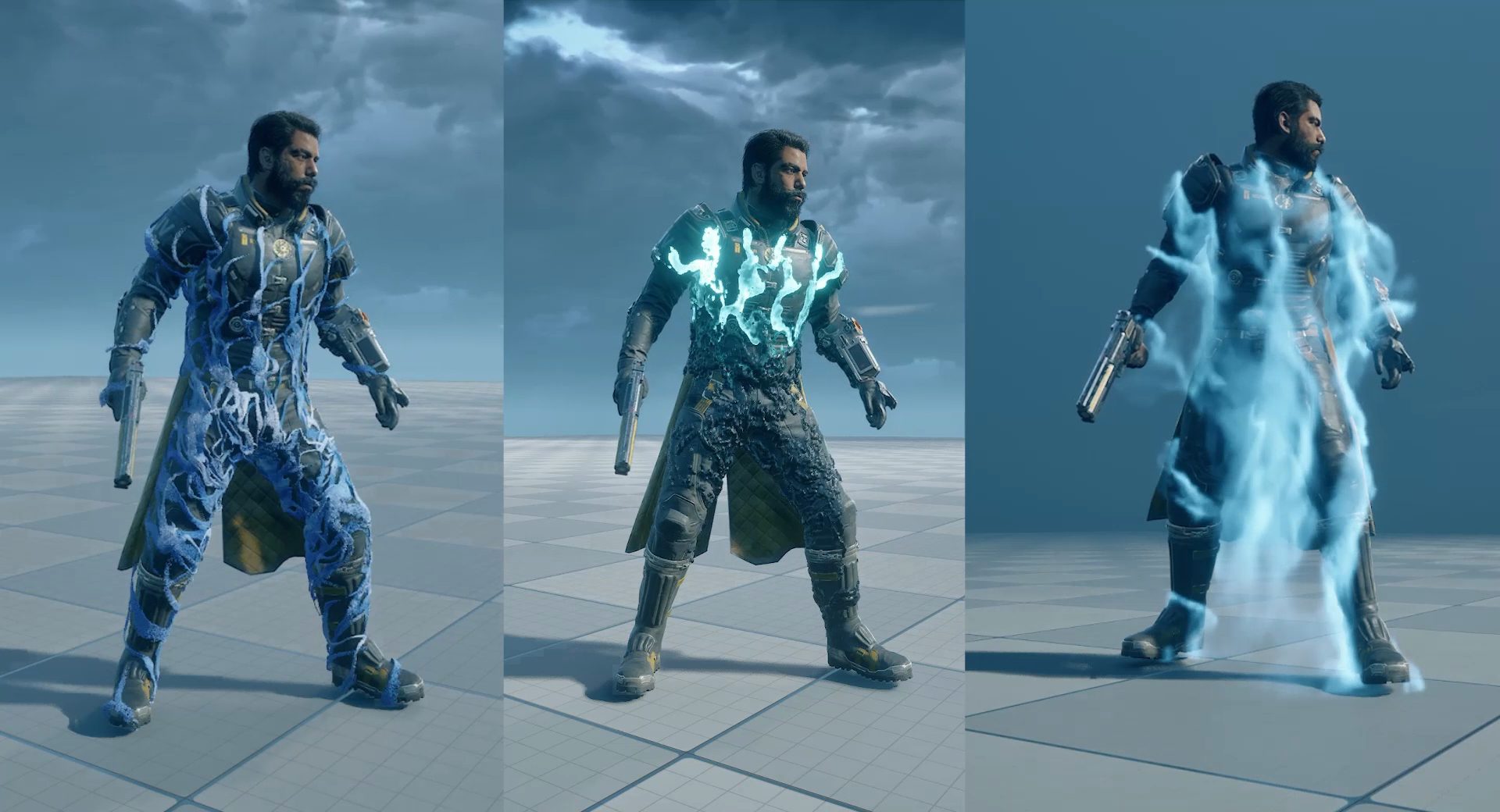
The most visible application of Graphite in Saros is its reactive volumetric fog, split into two complementary systems to cover both broad ambient atmosphere and fine-grained character-linked effects. Both systems were built by the studio’s graphics engineering team, led by Graphics Architect Sharman Jagadeesan and Senior Graphics Programmer Konsta Toivanen.
The low-frequency fog system handles ambient atmosphere for Saros’s Carcosa open world, built on a heavily modified version of Unreal Engine’s default froxel fog.
To fix the sluggish response caused by Unreal’s default 90% hysteresis coefficient, which retains 90% of the previous frame’s fog data, Housemarque dropped the value to 50%, using blue noise jitter and depth clamping to eliminate aliasing from the faster update rate.
The system also uses a dual Henyey-Greenstein phase function to model both forward and backward light scatter through fog based on viewing angle.
This modified fog stack includes a tunable colored absorption coefficient that enables a far broader palette of fog hues compared to older single-tone fog implementations, a custom self-shadowing pipeline that consolidates input from all active light sources into a single primary shadowing direction used during ray-marching passes, and a physically based sky lighting integral for accurate distant lighting without additional performance cost.
Advection from Housemarque’s player-following fluid simulation feeds directly into the fog’s density hysteresis step, making player movement, projectiles, explosions, and enemy actions all readable in the fog in real time.
For fine-grained, high-frequency effects including the smoke creatures that appear in narrative “Mirage” rooms across four of Saros’s biomes, the team built a custom ray marcher optimized for PS5 hardware. The marcher clusters scatter data into 8x8x8 voxel groups, only rendering clusters that contain effect data above a user-defined threshold to cap total draw calls, and skipping empty regions between clusters to take larger march steps where no effect data exists.
Lighting for the high-frequency fog uses a per-scatter-volume light volume containing irradiance from all active light sources, with pre-marched self-shadowing calculated for every light voxel. Artists can adjust albedo, absorbance, density, and shadowing parameters per volume to balance visual fidelity against performance constraints. The two fog systems are merged by sampling low-frequency fog scatter data during high-frequency marches, with feedback loops keeping both systems consistent with each other[1].
Graphite Supports External VFX Pipeline Integration
VFX Architect Risto Jankkila extended Graphite to ingest simulation data directly from Side Effects Houdini, enabling complex reactive VFX for Saros. The prologue’s smoky skull effect combines volumetric fog with secondary elements like attached cables, built using the new Graphite pipeline[1].
Unlike Housemarque’s past per-game engine builds, which were customized for individual titles, Graphite is designed as a shared, PS5-specific framework rather than a title-specific tool[1].
Bottom line: Housemarque’s Graphite framework eliminates more than 12 years of technical debt from its legacy NGP particle engine, delivering reactive, physically accurate volumetric fog and Houdini-integrated VFX tooling for Saros while establishing a reusable, PS5-optimized shared framework that replaces the studio’s prior per-game custom VFX engine builds for all future first-party PlayStation releases.