If your cable bill is the only reason you still have a cable box, live sports used to be the trap that kept you subscribed. In 2026 that trap has quietly come undone for two major leagues. Apple’s deals with Major League Soccer and Major League Baseball have turned live sports into one of the cleaner cord-cutter wins: every match, no blackouts, available in dozens of countries through a single app. You no longer need a regional sports network, a satellite dish, or a cable login to watch the games that used to be locked behind all three.
Here is what the 2026 setup actually looks like, what you need to start, and where it fits against the cable and streaming-bundle world it is slowly replacing.

Image: Apple
Two leagues, living in one app
The simplest way to understand Apple’s sports footprint is as two separate, complementary deals rather than one bundle.
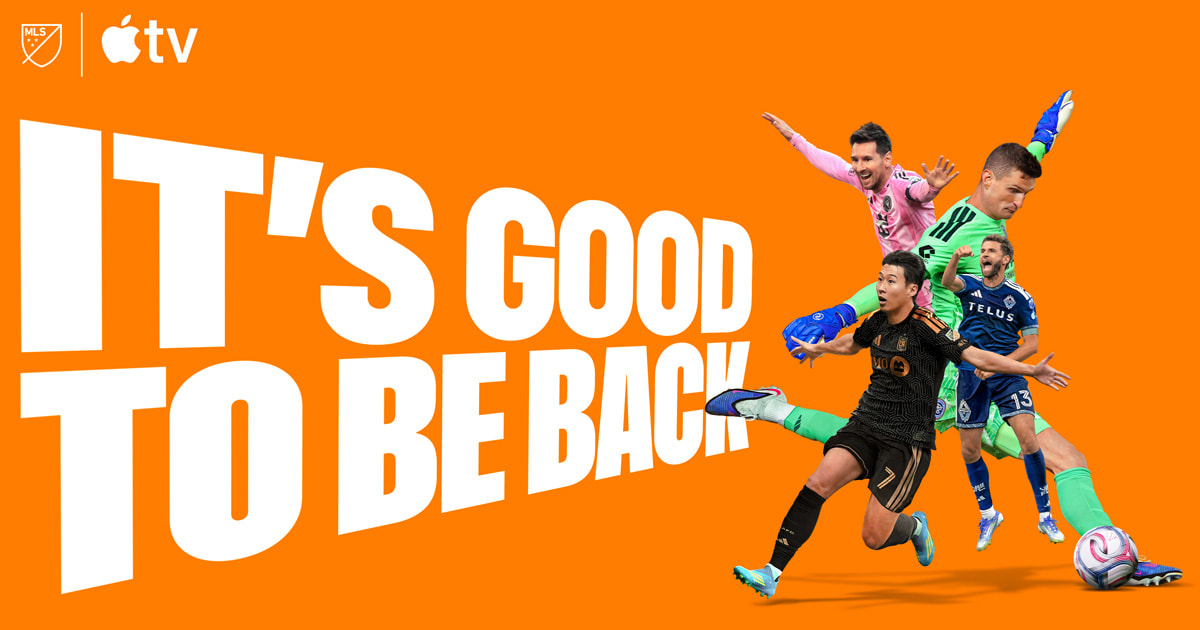
Major League Soccer resumed its regular season on Apple TV on July 16, 2026, after the league’s summer break for the FIFA World Cup. According to Apple’s newsroom, Apple TV subscribers in more than 100 countries and regions can watch every MLS match with no blackouts. That coverage is not just the marquee fixtures: it includes comprehensive analysis, exclusive content, and the matches that fall outside the regular season — the Leagues Cup, the Campeones Cup, the MLS All-Star Game, and the Audi MLS Cup Playoffs. All 30 clubs are part of the slate Apple Newsroom: MLS returns to Apple TV, July 2026.
Major League Baseball runs on a lighter, steadier cadence. Apple and MLB announced the August 2026 schedule for “Friday Night Baseball,” a weekly doubleheader that streams every Friday on Apple TV across the 2026 regular season. Apple says subscribers across roughly 60 countries and regions get two marquee matchups each week, with enhanced production and no local broadcast restrictions Apple Newsroom: MLB August Friday Night Baseball schedule, July 2026.
The two together mean that, for a soccer fan and a baseball fan respectively, the entire season of their league is reachable from one place — no channel surfing, no “is it on the local RSN tonight?” anxiety.
What “no blackouts” actually buys you
The phrase “no blackouts” sounds like marketing until you have lived inside the old system. Under traditional regional sports networks, a home game could be blacked out in your own metro if a local broadcaster held the rights, pushing you toward a more expensive TV package just to watch your own team. National streaming deals layered on top of that often inherited the same geographic restrictions.
Apple’s MLS deal removes that layer entirely: every match is available in every one of the 100-plus covered countries and regions, with no local blackout window. For MLB, the Friday-night slate carries no local broadcast restrictions either. For a cord-cutter, this is the feature that matters more than any single marquee matchup, because it is what makes the league predictable to watch.
What you need to start
The barrier to entry is lower than most people expect, and you do not need an Apple TV box to do it.
- A screen with the Apple TV app. The app ships on Apple TV, obviously, but also on most modern smart TVs, streaming sticks, PlayStation and Xbox consoles, and any iPhone, iPad, or Mac. If you already own a late-model TV, you likely already have a way to open it.
- A subscription that covers the league. Apple’s newsroom refers to “Apple TV subscribers” as the group that can watch every MLS match; the league’s coverage lives inside Apple’s sports offering rather than a separately branded channel you have to hunt for.
- The free Apple Sports app for the surrounding context. Even if you only want scores and stats, the free Apple Sports app for iPhone lets you follow standings, lineups, and play-by-play for your club throughout the season, then tap through to watch a match in the Apple TV app when one is on. It is the lightweight companion that makes the whole thing feel less like “subscribing to a league” and more like “checking the scores, then watching.”
You still need a decent internet connection, and the experience is only as good as your home network — but that is true of every streaming service, and it is a different, cheaper problem than maintaining a cable contract.
Where it fits against cable and bundles
The honest comparison is not “Apple versus nothing.” It is Apple versus the tangle of cable, satellite, and sports-add-on packages that live sports have historically required.
Cable’s advantage was always completeness: one bill, every league, every local team. Its cost was exactly that completeness — you paid for dozens of channels you never watched to get the two or three that carried live games. Streaming bundles reproduced parts of that, often with the same blackout quirks as cable. Apple’s MLS and MLB deals sit at the other end: narrower (two leagues, not all of them), but with none of the geographic restrictions and no channel-package archaeology. If soccer or baseball is your sport, the value proposition is hard to beat.
The gap to know about is the leagues Apple does not carry. NFL, NBA, and NHL games remain scattered across broadcasters and other streamers, so a full cord-cutter who follows multiple major leagues will still need more than one service. Treat Apple’s deals as the cleanest single-league solution, not a total replacement for every sports subscription.
The catches worth knowing
A guide is only useful if it names the limits, so here they are.
- MLB is a Friday thing. “Friday Night Baseball” is a weekly doubleheader, not every game. If you want your team’s Tuesday night start, that lives elsewhere. The Apple deal is the premium Friday window, not the full 162-game slate.
- MLS is a full season, but it is one league. If your sports loyalty is split across multiple leagues, Apple covers soccer and baseball well and leaves the rest to other services.
- You are trading channel-surfing for app-surfing. The win is real, but “one app for these two leagues” is not “one app for all sports.” Manage expectations accordingly.
- Internet is the new cable line. When your connection dips, so does the match. There is no antenna fallback. For most households this is a non-issue; for a few rural connections it is the real constraint.
The bottom line for cord-cutters
Live sports stopped being the thing that forced you to keep cable. Between MLS and MLB, Apple’s 2026 deals cover two full major-league seasons inside one app, with no blackouts and a free companion app for the stats-and-standings layer. If soccer or baseball is your sport, this is the rare case where cutting the cord costs you nothing in coverage and removes the regional restrictions that cable always kept in reserve.
Start with the Apple TV app on a device you already own, add the subscription that covers the league you follow, and keep the free Apple Sports app installed for the between-match obsession. You will have spent less than a month of cable and gained a season with fewer blackouts than cable ever offered.