Bottom line: Mobileye will launch a US robotaxi service in 2027 with 100 vehicles, scaling to ~17,000 over five years, while continuing to supply its self-driving stack to Volkswagen and others — putting the Intel subsidiary in direct competition with its own customers.
Mobileye has built its reputation on supplying autonomous driving technology to automakers. Now the Intel subsidiary wants to operate a robotaxi service itself. The company announced Tuesday it will launch a US robotaxi operation in 2027, starting with a fleet of 100 vehicles and targeting roughly 17,000 vehicles within five years Mobileye announces 2027 US robotaxi launch with 100-vehicle fleet.
The move creates a structural tension: Mobileye will compete for fleet contracts against the very OEMs and mobility providers that license its EyeQ chips and Chauffeur software stack.
A Supplier Turns Operator
Mobileye’s pivot has been years in the making. Founder and CEO Amnon Shashua told TechCrunch in 2018 that the “Holy Grail” was passenger-car autonomy — but reaching it required going through the robotaxi business first Shashua 2018 interview on robotaxi as path to consumer autonomy. The logic: robotaxi fleets generate the dense, high-utilization driving data needed to validate and improve Level 4 systems at scale.
Now Mobileye is formalizing that path. The company will create a new operating business for the robotaxi service, managing the fleet directly and using Moovit — the transit and ride-hailing app Mobileye owns — for the consumer-facing layer Mobileye to use Moovit for consumer-facing robotaxi app.
| Milestone | Target |
|---|---|
| Initial launch | 2027 (unspecified US city) |
| Phase-in fleet | 100 vehicles throughout 2027 |
| Five-year scale target | ~17,000 robotaxis |
| Consumer interface | Moovit app integration |
| Vehicle platform | “AV-ready vehicle platform manufacturers” (unnamed) |
The Channel Conflict Problem
Mobileye currently supplies its self-driving system to Volkswagen and the VW subsidiary MOIA, which operates its own autonomous ride-pooling pilots. By launching a competing robotaxi service, Mobileye becomes a channel competitor to its largest strategic customer.
Shashua framed the move as complementary: “This initiative is not a replacement for our existing partnerships; it is an extension of them. We remain deeply committed to our OEM partners” Shashua statement on partnership strategy. But the economics are unavoidable: every robotaxi Mobileye operates is a vehicle that doesn’t carry a VW badge running Mobileye software.
For product managers at OEMs, this raises contract questions:
- Do supply agreements include non-compete radii or fleet-cap clauses?
- Will Mobileye prioritize its own fleet for software updates and sensor allocations?
- How is data from Mobileye-operated vehicles firewalled from OEM partner programs?
Vehicle Platform: The Ora iQ Signal
Mobileye declined to name its vehicle partner, but the press release includes a render of what appears to be a modified Ora iQ — an electric crossover from China’s Great Wall Motors (GWM) Press render suggests Great Wall Motors Ora iQ as fleet vehicle. That choice would be notable:
- Cost structure: Chinese EV platforms undercut Western equivalents on bill-of-materials.
- Homologation: Federalizing a GWM vehicle for US robotaxi duty adds regulatory lead time.
- Supply chain: Aligns with Mobileye’s Israel/China R&D footprint but may trigger IRA/CHIPS Act scrutiny for fleet buyers.
Developers building fleet tooling should watch for API parity: will Mobileye expose the same telemetry, remote-assist, and dispatch hooks to third-party fleet operators that its own Moovit-integrated stack uses internally?
Moovit as the Distribution Layer
Mobileye acquired Moovit in 2020 for ~$900M. The app claims 1.5B+ users across 3,500+ cities. Integrating robotaxi hailing into an existing transit app solves the cold-start demand problem that plagues new mobility services: riders already have Moovit installed for bus/train planning.
For data/AI engineers, the Moovit integration implies a unified routing engine that blends:
- Fixed-route transit schedules
- Real-time robotaxi availability
- Dynamic pricing and pooling logic
- Multi-modal trip stitching (first/last mile + transit)
If Mobileye opens this routing layer via API, it becomes a platform play — not just a fleet operator.
What This Means for the AV Stack Market
Mobileye’s dual role accelerates a trend: the line between “supplier” and “operator” is dissolving. Waymo (Alphabet), Zoox (Amazon), and Cruise (GM) all started as captive units. Mobileye is the first major merchant silicon/software vendor to cross the line publicly.
Implications by persona:
| Persona | Practical Takeaway |
|---|---|
| Developer | Expect Mobileye to publish fleet-facing APIs (dispatch, telemetry, remote assist) — build integrations early. |
| Sysadmin / Infra | Robotaxi fleets generate 10–50 TB/vehicle/day; plan ingest pipelines for multi-petabyte scale if you’re a partner. |
| Data/AI Engineer | Mobileye’s owned fleet becomes a labeled-data flywheel; negotiate data-sharing rights in supply contracts. |
| Product Manager | Channel conflict is now a contract term — define “competing fleet” thresholds and update-priority SLAs. |
The Scaling Gamble
Seventeen thousand vehicles in five years implies ~9 vehicles/day net additions after the 2027 ramp — a cadence that demands:
- A certified, mass-producible AV platform (hence the “AV-ready vehicle platform manufacturers” phrasing)
- Depot infrastructure across multiple metros
- Remote-operations centers with <100ms latency to vehicles
- Insurance and regulatory frameworks in each launch jurisdiction
Mobileye has not disclosed capital requirements, but Waymo’s public disclosures suggest $1–2M per vehicle fully burdened (hardware, ops, insurance, depreciation) at scale. At 17,000 units, that’s a $17–34B fleet asset base — likely requiring project finance or a dedicated SPV.
Related Reading
- Waymo Robotaxi Expansion 2026: Phoenix, SF, LA Scaling — How the Alphabet unit is growing its owned fleet.
- Volkswagen MOIA Autonomous Strategy: Partnering With Mobileye — VW’s ride-pooling subsidiary and its Mobileye-powered pilots.
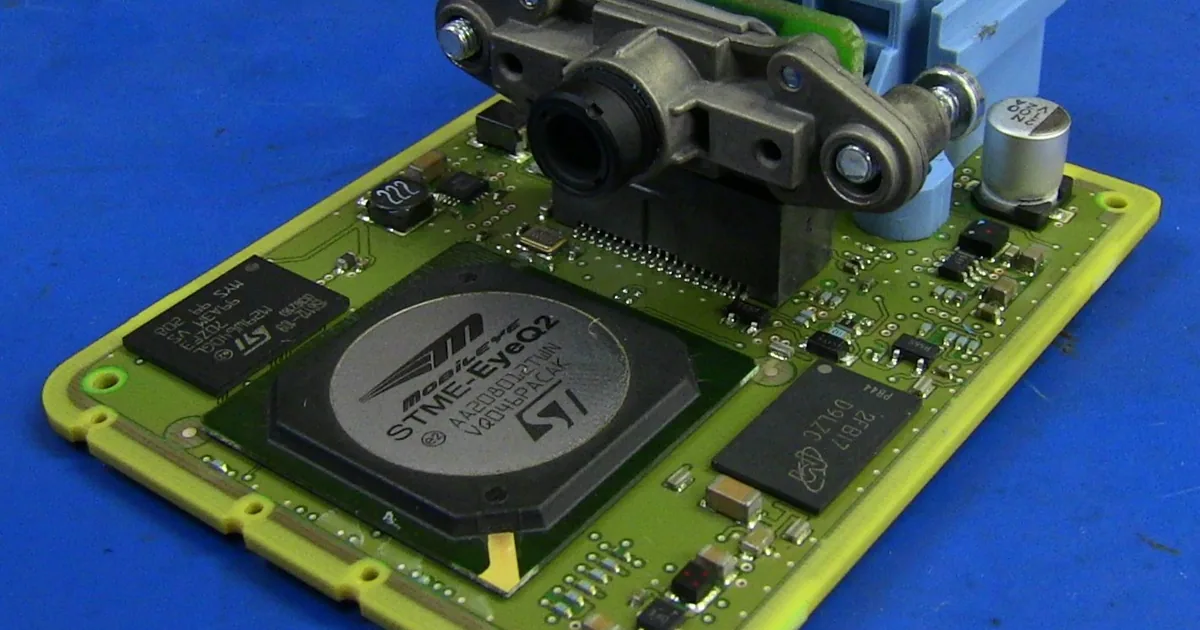
- Mobileye EyeQ6 Chip Details: The Silicon Behind Chauffeur — Deep dive on the SoC powering Mobileye’s L4 stack.
The Bottom Line
Mobileye’s robotaxi launch is a strategic hedge: if the industry consolidates around a few fleet operators (Waymo, Tesla, Zoox), owning a fleet ensures Mobileye isn’t locked out of the revenue pool. If OEMs retain control, Mobileye still wins as their supplier.
The risk is execution distraction. Running a 17,000-vehicle mobility service demands operational excellence — dispatch, charging, cleaning, maintenance, customer support — that shares little DNA with shipping EyeQ6 chips.
For the broader AV ecosystem, the message is clear: the supplier/operator boundary is now porous. Every Tier 1 autonomy vendor will face pressure to demonstrate a path to fleet revenue — or risk being disintermediated by the ones that do.