
Bottom line: SpaceX paid a 20× revenue multiple ($60B for $3B ARR) to own the developer interface — not just the model — and secure a talent pipeline that xAI was bleeding.
TL;DR: SpaceX finalized a $60B stock-swap acquisition of Anysphere (Cursor), handing xAI a $3B ARR product with 3,000+ enterprise customers and giving Cursor access to SpaceX’s vast GPU infrastructure. Deal closes Q3 2026.
SpaceX moved with unusual speed after its Nasdaq debut. Just two trading days post-IPO — with the company valued above $2.7 trillion — Elon Musk’s aerospace giant formally closed its $60 billion acquisition of Anysphere, the startup behind the AI coding assistant Cursor SpaceX bets $60 billion on Cursor to catch OpenAI and Anthropic. Anysphere investors receive SpaceX shares; the transaction is expected to finalize in Q3 2026.
The move is less a victory lap than an admission. Since merging with SpaceX in February, xAI has trailed OpenAI and Anthropic in the only generative-AI category with proven enterprise pull: AI-assisted coding. Bloomberg reports Cursor engineers had already been embedded in xAI offices for weeks co-training a new model, and SpaceX confirmed the joint effort on X.
Why Did SpaceX Buy Cursor?
xAI’s deficit was structural. The division lost dozens of engineers and data-training staff in recent months, forcing Musk to redeploy talent from Starlink and Tesla SpaceX bets $60 billion on Cursor to catch OpenAI and Anthropic. Meanwhile, Cursor had quietly become a revenue machine: $3 billion annualized revenue by end of April, up from $2 billion in February, with more than 3,000 customers paying at least $100,000 per year SpaceX bets $60 billion on Cursor to catch OpenAI and Anthropic.
| Metric | Cursor (Anysphere) | xAI (pre-acquisition) |
|---|---|---|
| ARR (Apr 2026) | $3B | Negligible in coding |
| Enterprise seats | 3,000+ @ $100k+ | Internal only |
| Model dependency | OpenAI, Anthropic, own | Grok family only |
| Talent pipeline | Own recruiting firm (places at OpenAI) | Bleeding engineers |
Cursor’s growth created its own vulnerability. The assistant relied heavily on OpenAI and Anthropic models while building its own — a precarious position when your suppliers are also your fiercest competitors. Selling to a capital-rich, compute-heavy parent solved that conflict.
What Does Cursor Gain? Compute for Talent
The swap is explicit. Cursor gains SpaceX’s “massive chip stockpile” — likely the largest private GPU reserve outside the major cloud providers — while xAI acquires a ready-made talent engine. Anysphere’s in-house recruiting firm, which Bloomberg notes helps place candidates at OpenAI, becomes an internal headhunting asset for Musk’s AI ambitions SpaceX bets $60 billion on Cursor to catch OpenAI and Anthropic.
For developers, the immediate question is model diversity. Cursor’s strength was model-agnostic orchestration: routing tasks to GPT-4o, Claude 3.5 Sonnet, or local models based on latency and cost. xAI’s roadmap has been Grok-centric. The merged entity must decide whether Cursor remains a neutral gateway or becomes a Grok distribution channel.
How Does This Fit the Enterprise Coding Arms Race?
The acquisition accelerates a three-way battle for the developer wallet.
OpenAI just launched its Partner Network with $150 million in ecosystem funding and a target of 300,000 certified consultants by year-end Introducing the OpenAI Partner Network. The program explicitly targets systems integrators and consultancies to embed OpenAI models into enterprise workflows — the same channel Cursor sells through directly.
Microsoft, meanwhile, is doubling down on model heterogeneity. Satya Nadella has warned against “a world where every company across every sector is ceding value to a few models that eat everything they see,” positioning GitHub Copilot and Copilot Studio as platforms that support model diversity at every layer Achieving success with AI. Microsoft’s Intelligence + Trust framework emphasizes governance, FinOps, and observability — enterprise features Cursor has largely left to IT departments.
Practical Takeaways by Role
For Developers
- Short term: Cursor’s IDE plugin, CLI, and team features continue unchanged. The $20/seat Pro tier and $40/seat Business tier remain.
- Medium term: Watch for Grok integration as a default option. If xAI makes Grok the “preferred” model for Cursor’s autocomplete and chat, latency and quality on non-Grok models may deprioritize.
- Lock-in risk: Cursor’s
.cursorrulesand project-indexing formats are proprietary. Export tooling is minimal. Evaluate Zed, Windsurf, or Continue.dev if vendor neutrality matters.
For Sysadmins / Platform Teams
- License management: Cursor’s enterprise contracts ($100k+ minimum) now roll into SpaceX/xAI procurement. Expect bundled deals with Starlink Business or Tesla Fleet APIs.
- Data residency: Cursor’s cloud indexing sends code snippets to remote models. With xAI ownership, data may route through SpaceX-operated inference clusters — clarify jurisdictional compliance before renewing.
- SSO/SCIM: No announced changes, but SpaceX’s identity stack (likely Okta/Azure AD) may replace Cursor’s auth backend.
For Data / AI Engineers
- Custom model fine-tuning: Cursor’s enterprise tier allows private model endpoints. xAI’s GPU stockpile could make dedicated Grok fine-tunes economically viable for large accounts.
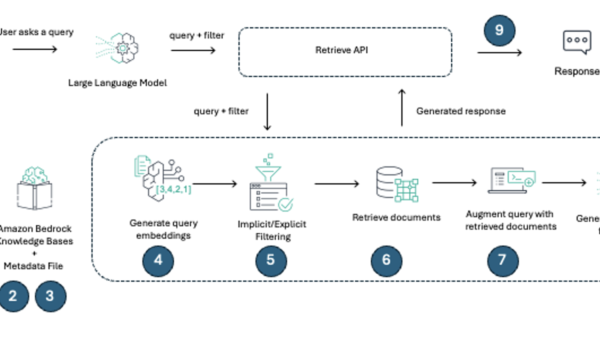
- RAG pipeline access: Cursor’s codebase indexing is a de facto RAG system. API exposure for custom retrieval (e.g., internal docs, ticketing systems) is a likely product extension.
- Benchmark access: xAI publishes Grok benchmarks irregularly. Demand third-party evals (HumanEval, SWE-bench, LiveCodeBench) before committing production workloads.
For Product Managers
- Build vs. buy calculus shifts: A $60B valuation on $3B ARR implies 20x revenue multiple — the market prices distribution and talent over current cash flow. If you’re building internal coding agents, the bar for “good enough to replace Cursor” just rose.
- Partner ecosystem: OpenAI’s 300k consultant target and Microsoft’s SI network mean implementation capacity is the new bottleneck. Cursor/xAI lacks a comparable services channel — factor integration cost into TCO.
The Unspoken Bet: Distribution Over Models
Musk’s wager isn’t that Grok will beat GPT-5 or Claude 4. It’s that owning the developer interface — the IDE, the terminal, the PR reviewer — creates a moat deeper than any single model. Cursor’s 3,000 enterprise contracts are beachheads in engineering organizations that buy GPUs, cloud, and satellite connectivity.
If xAI can make Cursor the default control plane for AI-assisted development, it captures the workflow before the model choice. That’s the same logic driving Microsoft’s Copilot everywhere strategy and OpenAI’s partner army. The difference: SpaceX pays for its own compute, answering to no cloud landlord.
Bottom Line
The SpaceX–Cursor merger reshapes the AI coding landscape overnight. Developers get a better-funded tool with uncertain model neutrality. Enterprises get a vendor with satellite-scale infrastructure but no proven enterprise-support track record. Competitors get a clearer target.
Watch Q3 2026 for: (1) Grok-as-default rollout telemetry, (2) Cursor pricing restructuring under SpaceX finance, (3) talent retention — if Anysphere’s core team stays, the product velocity could justify the multiple. If they leave, SpaceX bought a brand and a customer list, not an engine.
For now, keep Cursor in your stack, but keep your .cursorrules portable. The next 12 months will decide whether this acquisition births a third pole in AI coding — or becomes the most expensive acquihire in tech history.