TL;DR
- RAG (retrieval-augmented generation) is a pattern where an AI model searches your documents first, then writes its answer from what it found — instead of guessing from training data.
- It was introduced in a 2020 paper by Lewis et al. and has become the default architecture for putting a chatbot on your own data.
- A RAG system has two halves: a retriever that finds relevant text chunks, and a generator (the language model) that answers using those chunks as context.
- Most RAG failures are retrieval failures, not model failures — the model confidently answers from the wrong passages, and that’s the part most teams underinvest in.
- It’s not a hallucination cure and it’s not magic. Done right, it’s the fastest way to make a model answer from your documents and stay current.
The Scenario That Actually Breaks RAG
A product manager deploys an internal chatbot on 10,000 support tickets. The model is GPT-4-class. The embedding model is solid. Three weeks later, the team notices the bot confidently cites the wrong refund policy — the old one from 18 months ago — because the vector search surfaced a stale chunk that semantically resembled the question more than the current policy did.
Nobody blamed the language model. The language model did exactly what it was told: summarise the retrieved context. The problem was in the retriever — and it’s been silently wrong for weeks.
This is the RAG failure mode that almost no explainer leads with, even though retrieval quality is the single biggest lever in any RAG deployment. Understanding what RAG is means understanding this asymmetry: the generator gets the blame, the retriever deserves it.
How RAG Works, and Why the Two Halves Are Not Equal
What is RAG, stripped to first principles? A language model’s knowledge is frozen at training time. Ask it about your company’s internal docs, last month’s pricing update, or a policy you changed yesterday, and it either says it doesn’t know or — more dangerously — makes something up. Retrieval-augmented generation fixes this by inserting a search step before the model writes anything.
The original 2020 RAG paper from Facebook AI Research combined a dense retriever (DPR) with a seq2seq generator (BART) and demonstrated that pre-training a separate retrieval component and then conditioning generation on retrieved passages outperformed models that tried to memorize everything in weights alone. The core insight was architectural: store knowledge outside the model, retrieve it at query time.
In practice, a RAG pipeline splits into two stages that are far from symmetrical in terms of where engineering effort pays off:
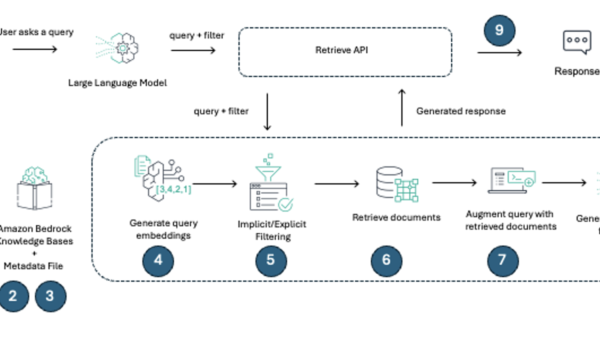
Retrieval — Your documents are chunked and converted into embeddings: numeric vectors that encode semantic meaning. Those vectors go into a vector database (Chroma, Pinecone, Weaviate, pgvector — all viable options). At query time, the user’s question is embedded the same way, and the system retrieves the chunks whose vectors are nearest. Most production deployments also blend in keyword search (BM25 or similar), because pure vector search misses exact matches — a part number, a model name, an error code. This hybrid approach is now considered standard practice, according to a 2024 survey of RAG architectures.
Generation — The retrieved chunks are inserted into the prompt alongside the question, usually with an instruction: “answer only from the context below; say you don’t know if the answer isn’t there.” The model then writes a response grounded in those passages. Well-designed systems ask the model to cite which chunk each claim comes from, so a human (or another automated check) can verify the chain of evidence.
The asymmetry is this: if retrieval is bad, generation will be confidently wrong. There’s no recovery path at the generation stage for retrieval noise. But if generation is merely average and retrieval is precise, the answer is usually acceptable. That’s why senior ML engineers optimise retrieval obsessively and treat generation as a commodity step.
The Three Chunking Decisions That Quietly Break Everything
Most RAG tutorials gloss over chunking — the step where you split documents into the passages that actually get retrieved. It’s unglamorous and decisive.
Split a document with a fixed 512-token chunk and you’ll routinely sever the paragraph that contained the answer. The opening sentence of the next chunk — “However, as noted above” — retrieves fine semantically but is meaningless without the context you just discarded. In practice, teams typically use overlapping chunks (e.g., 512 tokens with a 128-token overlap) to reduce seam failures, but this is a heuristic, not a solution.
The three decisions that matter most: chunk size (smaller is more precise but loses context; larger captures more but dilutes the signal), overlap (reduces severed logic but inflates the index and retrieval cost), and metadata filters (letting the retriever narrow by document type, date, or department before doing semantic search).
Metadata filtering is the fastest path to killing the stale-policy problem above. Teams that scope retrieval to “only the last 90 days of policy documents” before running semantic search tend to see dramatic drops in retrieval hallucinations. It’s the cheapest fix most teams skip.
See how agents and tool use extend these patterns and how MCP standardizes context delivery for related architectures.
Where RAG Actually Shows Up in 2026
RAG is quietly behind more products than most users realise. A few concrete deployments:
- Customer support assistants that answer from a company’s help centre and ticket history instead of letting a generic model guess at policies. Zendesk, Intercom, and Freshdesk all offer RAG-backed layers on top of their existing knowledge bases.
- Internal “chat with your docs” search — employees ask questions and get answers grounded in wikis, contracts, PDFs and Confluence pages, with links back to the source. Teams that couldn’t afford a $200K enterprise search product are building this in a weekend with open-source tooling.
- Coding assistants (Cursor, GitHub Copilot’s workspace feature, Codeium) that retrieve from your project’s files, READMEs and internal SDKs before suggesting code — so the answer fits your codebase, not a generic one.
- Research tools that pull from a curated corpus of academic papers or financial reports and summarise with inline citations.
The newest architectural shift is agentic RAG: instead of a single retrieve-then-answer loop, an agent runs multiple retrieval rounds, reformulates its own queries based on what it found (or didn’t find), and can call external tools between steps. It’s demonstrably more capable on complex multi-hop questions, but substantially more expensive and harder to keep predictable.
The Limits RAG Doesn’t Advertise
RAG reduces hallucinations significantly. It does not eliminate them, and the failure modes it introduces are different from the ones it fixes.
Retrieval can surface the wrong passage. The embedding model might judge two passages as semantically similar when they are not factually interchangeable. The model will then summarise the wrong passage with full confidence. This is worse than “I don’t know.”
Chunking severs the logic chain. A three-paragraph argument where the conclusion only makes sense if you read all three paragraphs breaks badly when retrieved as three separate chunks. The model gets chunk 3 and draws a conclusion that would have been qualified by chunk 1.
Context-window limits are still real. Long-context models in 2026 have eased this — Gemini 1.5 Pro and Claude 3’s extended context windows now let teams stuff far more retrieved text into a prompt than was possible two years ago. But more context doesn’t automatically mean better answers; it can dilute the signal from the actually-relevant passage.
Freshness is only as good as your indexing pipeline. RAG removes the bottleneck of retraining a model on new data. But if your document store updates nightly and a policy changed at 3pm, your RAG system gives stale answers until the next index refresh. The problem moves, not disappears.
It doesn’t work for everything in the weights. General world knowledge — “who wrote Hamlet?”, “what’s the capital of France?” — is reliably in the model already. Adding a retrieval step for questions like this just adds latency without improving accuracy. RAG earns its keep specifically when answers must reflect your documents, stay current, or be traceable to a source.
Is RAG the Right Tool for Your Case?
If your knowledge is static and already in the model: use a plain prompt. No retrieval needed, and adding it only introduces moving parts.
If you need answers from documents you control: RAG is the fastest path. You don’t retrain the model; you update the document store.
If you need to audit every answer: RAG’s citation capability is the best mechanism available for that. Fine-tuning bakes new behaviour into weights — you can’t trace it back to a source.
If you need very high accuracy on narrow domains: consider hybrid: RAG for knowledge recall plus fine-tuning for style and format. Neither alone is optimal.
If you’re evaluating RAG pipelines: the one metric that predicts downstream answer quality best is retrieval precision — the fraction of retrieved passages that are actually relevant to the question. Teams that instrument this (for example, with an LLM-as-judge checking retrieved chunks against the query) catch retrieval regressions before they become user-visible failures.
Bottom Line
RAG is still the default architecture for grounding AI answers in your own documents, and that’s not changing in 2026. The model is not the hard part. Retrieval is. Invest in chunking strategy, add metadata filters, instrument retrieval precision, and make the model say “I don’t know” when the answer isn’t in the context. Do those four things and you turn a system that guesses into one that actually looks things up.
FAQ: What People Actually Ask About RAG
Is RAG the same as fine-tuning?
No. Fine-tuning modifies the model’s weights — it’s slow, expensive, and you can’t easily trace a specific answer back to a specific training example. RAG leaves the model’s weights alone and feeds it retrieved documents at inference time. Most teams try RAG first; fine-tuning is for when you need a specific output style or behaviour that retrieval alone can’t produce.
Do I need a vector database?
For small document sets, you can get away with in-memory search (FAISS, annoy) or even brute-force cosine similarity. But vector databases (Chroma, Pinecone, pgvector) add filtering, persistence, and update operations that matter at production scale. Most real deployments graduate to one quickly.
Does RAG stop AI hallucination completely?
No — and this is important. It reduces hallucination significantly by grounding answers in retrieved text, but the model can still misread context, over-generalise from a single retrieved passage, or confabulate when the retrieved chunks don’t actually contain a clear answer. Always allow the model to say “I don’t know” and surface source links so humans can check.
What should I actually measure in a RAG deployment?
Four things: retrieval precision (are the right chunks coming back?), answer faithfulness (does the answer stick to what was retrieved?), answer relevance (does it address what was asked?), and latency per query. Most teams only track latency and user satisfaction, and then wonder why the bot starts hallucinating on edge cases six months later.
Last verified June 13, 2026. Primary source: Lewis et al., 2020.