Apple announced on June 8, 2026 that Siri AI — the new Apple Intelligence-powered Siri — will not launch in the EU on iOS 27, iPadOS 27, or watchOS 27 due to the Digital Markets Act. macOS 27 and visionOS 27 are unaffected. Apple cites regulators’ “extreme interpretation” requiring unsafe third-party data access; no timeline for EU iPhone/iPad availability.
Apple’s official Siri AI introduction confirms the delay is specific to Siri AI on mobile and tablet platforms, not a blanket block on all Apple Intelligence features.
The Digital Markets Act is forcing Apple to choose between its privacy architecture and EU market access — and Apple is choosing privacy. The result: EU iPhone and iPad users won’t get the new Siri AI at launch, while Mac and Vision Pro users will.
Platform-by-platform breakdown: what’s blocked and what’s not
|| Platform | EU Siri AI on Launch? | Reason |
|———-|———————-|——–|
| iOS 27 | ❌ No | Core platform — DMA conflict |
| iPadOS 27 | ❌ No | Core platform — DMA conflict |
| watchOS 27 | ❌ No | Requires paired iPhone with Siri AI |
| macOS 27 | ✅ Yes | Unaffected by DMA ruling |
| visionOS 27 | ✅ Yes | Unaffected by DMA ruling |
The DMA applies to “gatekeepers” (Apple qualifies) and demands interoperability for virtual assistants. Apple says EU regulators interpret this as requiring nearly unlimited device access for any AI system — including reading/sending messages, making purchases, accessing files, and executing actions across any app — without ongoing user visibility or control.
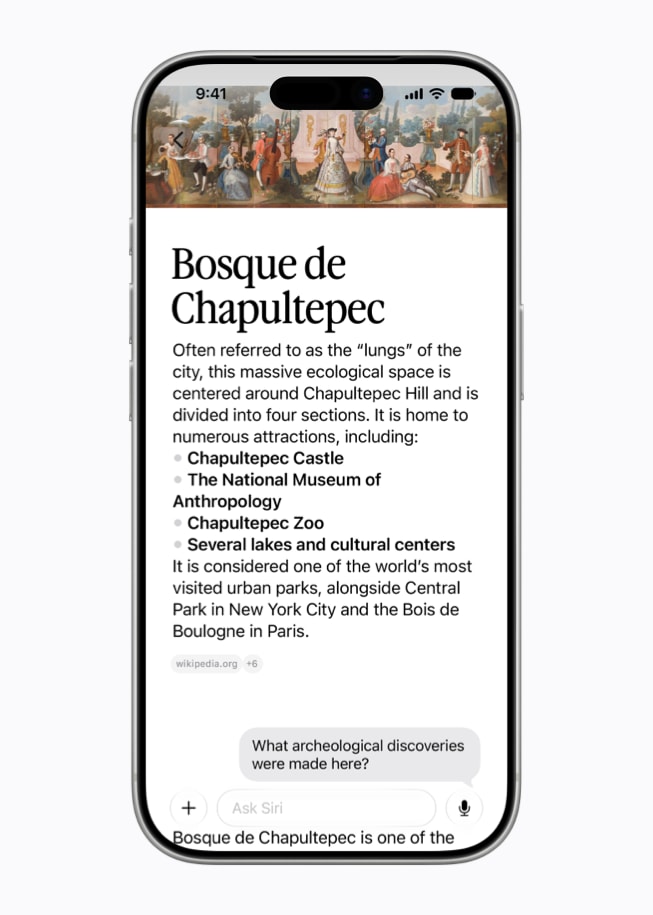
What EU iPhone and iPad users actually lose
Siri AI isn’t just a better voice assistant — it’s a fundamentally different interaction model. EU users on iOS 27 and iPadOS 27 will miss:
- New dedicated Siri AI app to revisit conversations
- Expanded Visual Intelligence experience
- Integrated writing tools across the OS
- Siri mode in Camera (iOS)
- Other Siri AI capabilities announced at WWDC26
- watchOS 27 Siri AI (blocked because it needs paired iPhone with Siri AI)
Developers in the EU also can’t test or use Siri AI features for their apps on iOS 27, iPadOS 27, and watchOS 27. Apple explicitly confirmed that developer access is also blocked on these platforms.
Developer restrictions in the EU
EU-based developers face a split ecosystem: teams building universal apps must maintain separate Siri AI code paths for EU mobile devices versus Mac and visionOS. The practical cost is duplicated QA, conditional feature flags, and delayed EU rollouts for any app relying on Siri AI integration. Apple’s DMA impact page from September 2025 outlines how DMA compliance has already forced changes to App Store rules, payment systems, and browser choice — Siri AI is the latest casualty.
Apple’s argument: privacy vs. regulatory overreach
How Siri AI is built
- On-device processing as primary method
- Private Cloud Compute extends iPhone privacy/security into cloud
- Deep integration across Apple platforms
Siri AI processes requests on-device first. When cloud inference is needed, Private Cloud Compute routes the request to Apple-managed servers that do not store user data and cryptographically verify their own software. Apple argues this is fundamentally incompatible with the DMA’s demand for uncontrolled third-party access.
What EU regulators require
“The DMA requires Apple to give any AI system nearly unlimited access to a user’s device, as well as the ability to act on that access autonomously without a user’s ongoing visibility and control.”
Required access would include: read/send messages, make purchases, access files, execute actions across any app.
Apple’s security rationale cites research showing AI systems can be hijacked to steal personal data — like passwords and photos — and to permanently alter files and account settings without a user’s consent.
Apple’s proposed fixes: rejected
|| Solution | Status |
|———-|——–|
| Trusted System Agent — intermediary allowing virtual assistants to safely access Siri AI features on EU devices | Rejected by European Commission |
| 18-month gradual rollout alongside Siri AI EU launch | Not agreed to |
“The European Commission did not agree to any of Apple’s proposals.” — Apple Newsroom, June 8, 2026
Why Apple did (and didn’t) fight this
Apple has previously contested EU regulatory actions, including the Commission’s preliminary view that App Store rules breach the DMA, but a fresh legal challenge would take months to years — no help for iOS 27 launch. The company is pursuing “engagement” with regulators, not defiance. Fines (up to 10% global revenue) are a last resort.
Impact by platform and user type
|| If You’re… | Impact |
|————–|——–|
| EU iPhone/iPad user | No Siri AI at iOS 27 launch — standard Siri only. No ETA for update. |
| EU Mac user (macOS 27) | Full Siri AI available — unaffected by ruling. |
| EU Vision Pro user (visionOS 27) | Full Siri AI available — unaffected by ruling. |
| EU Developer | Can’t test Siri AI features on iPhone/iPad/watchOS simulators or devices. Mac/visionOS testing works. |
| Non-EU user | No change — Siri AI launches normally on all platforms. |
Apple Intelligence beyond Siri AI
The delay specifically covers Siri AI — the new conversational assistant. Other Apple Intelligence features announced at WWDC26, such as Writing Tools, Image Playground, and Genmoji, may have separate regulatory assessments and are not explicitly blocked by the June 8 announcement.
This means EU users may still get new AI-powered writing and image generation tools at iOS 27 launch, just not the conversational Siri layer that ties them together. The split could fragment the Apple Intelligence experience for EU customers.
The regulatory standoff in context
This is the highest-profile DMA enforcement clash yet. The core tension: interoperability mandate vs. privacy architecture. Apple built Siri AI around on-device processing + Private Cloud Compute; the DMA (as interpreted by EU regulators) demands open access that Apple argues breaks that model.
The European Commission’s own DMA portal shows the law has been entirely applicable since March 2024, with gatekeepers facing fines up to 10% of global revenue. Apple and Meta were both found non-compliant in April 2025 and fined — Apple €500 million, Meta €200 million.
No resolution timeline exists for Siri AI. Apple says it “will continue working to bring features to EU users as safely as possible.” The Commission has not publicly responded to Apple’s June 8 statement.
What readers are asking
Will Siri AI ever come to EU iPhones?
Apple says it hopes to eventually bring Siri AI to the EU and will continue engaging with regulators, but the company explicitly stated it has “no timeline” for availability.
Can I sideload Siri AI on an EU iPhone?
No. This is a system-level Apple Intelligence feature, not an App Store download. Region locking is enforced at OS level. Even if you sideload apps, Siri AI requires deep OS integration that cannot be bypassed.
Does this affect all Apple Intelligence features?
The announcement specifically covers Siri AI (the new Apple Intelligence-powered Siri). Other Apple Intelligence features (Writing Tools, Image Playground, Genmoji, etc.) may have separate regulatory assessments and could launch independently.
What about UK users post-Brexit?
UK has its own Digital Markets Act equivalent, but Apple’s statement specifies “EU” (27 member states). Apple’s DMA impact page focuses on EU-27 compliance. UK status is unclear pending separate regulatory action from UK competition authorities.
How long will this delay last?
There is no official timeline. Apple’s history with EU regulators suggests resolution could take months or years. The February 2025 fines were preceded by years of negotiation. Don’t expect Siri AI in the EU before 2027 unless regulators substantially revise their interpretation of the DMA.
Bottom line: Apple’s Siri AI is blocked in the EU not because of a technical limitation, but because the Digital Markets Act forces a choice between open access and the privacy model Apple built. EU iPhone and iPad users lose the flagship Apple Intelligence feature at launch; Mac and Vision Pro users don’t. There is no workaround, and no timeline for a fix. If you’re an EU developer, plan for a split Siri AI code path.
Editorial note: Citation cleanup: we trimmed duplicate citation links that repeated the same source after multiple paragraphs. Every fact and quote is unchanged; the source remains cited where each claim appears.