
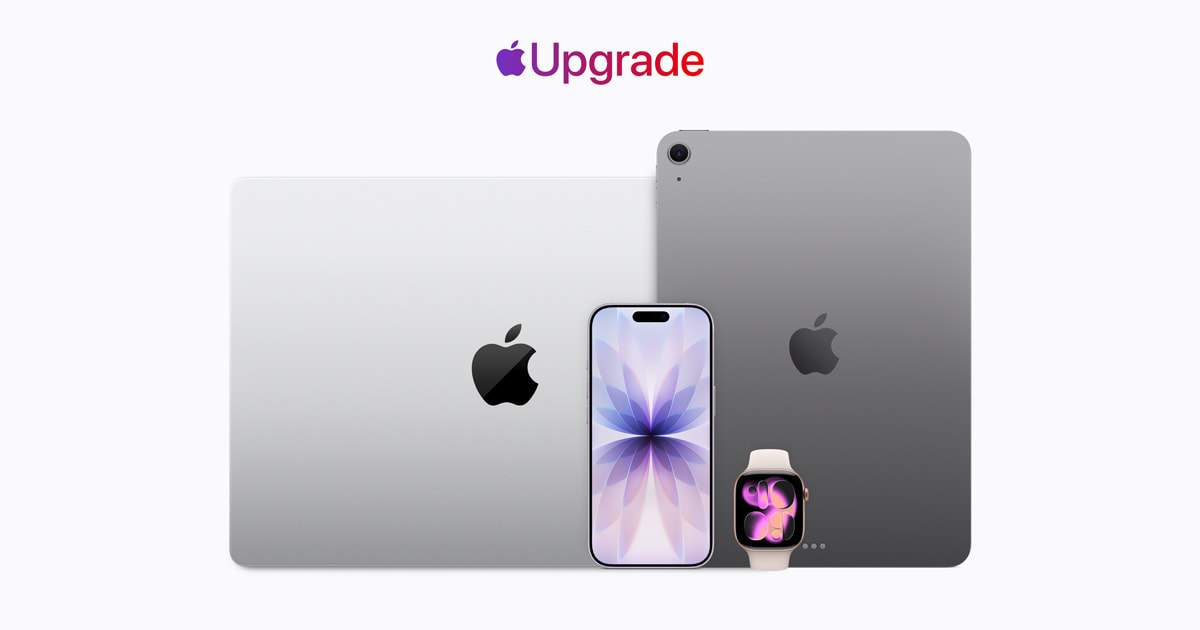
Apple quietly changed how Americans will pay for its hardware. On July 28 the company launched Apple Upgrade, a Klarna-provided leasing program covering iPhone, Apple Watch, Mac, and iPad in the United States — and in the same breath discontinued both the decade-old iPhone Upgrade Program and iPhone Payments financing.
The headline numbers are aggressive: iPhone leases start at $17.99 per month, Apple Watch and iPad at $11.99, and Mac at $24.99. iPhone and Apple Watch come with 12- or 24-month terms; Mac and iPad get 24- or 36-month terms. The program is available on the Apple Store online, in the Apple Store app, and at retail locations, with enrollment built into the normal checkout flow. Eligibility runs through a soft credit check that doesn’t affect your credit score, trade-ins (including Android phones) can lower the monthly payment, and Apple Card users earn 3 percent Daily Cash on lease payments.
“At Apple, we put the customer at the center of everything we do,” said Karen Rasmussen, Apple’s vice president of the Apple Store online, “and we’re thrilled that Apple Upgrade offers our customers, both online and in-store, a more flexible way to pay for the products they love.”
A lease is not a loan — and the difference matters
The old iPhone Upgrade Program, which debuted alongside the iPhone 6s in September 2015, was an installment loan backed by Citizens One: every payment went toward the purchase price, and after 24 payments the phone was yours. As 9to5Mac’s breakdown of the wind-down points out, Apple Upgrade is structurally different. It’s a true lease — Klarna owns the device for the entire term, and your payments cover its use, not its purchase.
That has two practical consequences. First, you never own the hardware unless you pay a buyout: at the end of the term you either upgrade to a new device, return it and walk away, or buy it by paying the difference between your accumulated payments and the list price. Second, AppleCare is no longer baked in. The old program bundled AppleCare+ into the monthly price; Apple Upgrade sells it as a separate monthly add-on (or lets you attach the device to an existing AppleCare One bundle).
There’s also fine print worth reading before you enroll. According to 9to5Mac’s how-it-works guide, iPhone leases require an AT&T, T-Mobile, or Verizon plan — no prepaid — though the phone itself stays unlocked. Missed payments roll into the next month with no late fees, but three consecutive misses end the agreement and make the full outstanding balance due. And the end-of-term default is the one to watch: do nothing when your lease expires and it converts to month-to-month for up to six months, payments can increase, and you’re eventually charged the full purchase amount anyway.
What happens to iPhone Upgrade Program members
Existing members aren’t cut off overnight. They keep making their remaining monthly payments, and when their upgrade window arrives they choose a new path: lease through Apple Upgrade, finance with Apple Card Monthly Installments, pay outright, or take carrier financing. What they can’t do is get another iPhone through the old program — it’s closed to new upgrades.
The upside of the new structure is flexibility from day one: you can upgrade early or exit early at any point by paying off the remaining scheduled payments, with no interest or fees of any kind. The downside is philosophical as much as financial. The iPhone Upgrade Program was a path to ownership that happened to enable annual upgrades; Apple Upgrade is a subscription to hardware that happens to offer a buyout. For people who upgrade every year or two anyway, the math may genuinely improve — a $17.99 floor undercuts the old program’s entry price substantially. For people who keep devices for four or five years, buying outright or using Apple Card installments remains the way to actually own what you’re paying for.
Apple extending the lease model beyond iPhone to Mac, iPad, and Apple Watch is the bigger tell: this is the “Apple hardware as a service” strategy that has been rumored for years, finally shipping — with Klarna, not Apple, holding the paper.