A June 17, 2026 arXiv preprint introduces a reusable human-in-the-loop pipeline to measure undergraduate CS curriculum alignment against CS2013 and CS2023 standards, with initial testing showing 49.7% CS2023 coverage for one accredited BSc program.
Reusable Pipeline Quantifies CS Curriculum Alignment Against CS2013 and CS2023
The June 17, 2026 arXiv preprint notes no standardized, reproducible method previously existed to measure how fully a CS program covers the defined knowledge units of decennial curricular guidelines like CS2013 and CS2023. The study designed the pipeline to fill that gap for undergraduate programs.
Its initial longitudinal analysis maps coverage of both the 2013 and 2023 Computer Science Curricula guidelines for one accredited BSc program, producing the first side-by-side alignment metrics for the two standards.
Retrieve-Then-Confirm Workflow Balances Automation and Human Accuracy
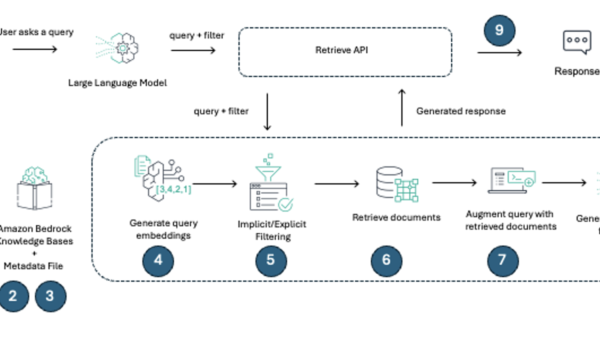
The pipeline uses a retrieve-then-confirm workflow to balance automation speed with human accuracy. It first represents a program’s course materials and each guideline’s knowledge units as structured corpora, then generates candidate course-to-knowledge-unit matches via semantic retrieval. Human raters confirm all matches against a defined coverage criteria to eliminate the inconsistency of fully manual mapping.
The workflow is modular: programs can run partial assessments measuring coverage of only specific knowledge units, rather than mapping their entire curriculum to the full standard. The study’s methodology documentation outlines the full coverage criteria and rater training protocol used to ensure consistent validation across all matches.
7 Retrieval Models Benchmarked, Ensemble Approach Tops Accuracy Tests
The research team benchmarked seven retrieval models to optimize pipeline match accuracy: small sentence transformers, long-context large language models, and hybrid ensemble approaches. A reciprocal-rank-fusion ensemble of multiple retrievers outperformed all individual models in testing.
A widely cited long-context large language model underperformed relative to smaller sentence transformer models in the benchmark. Inter-rater reliability was confirmed via independent second ratings of a stratified match sample, with the study’s reliability analysis reporting Cohen’s kappa scores of 0.64 for CS2023 and 0.69 for CS2013, indicating substantial rater agreement and validating pipeline output.
Longitudinal Analysis Finds Near-Constant Topical Coverage, 19-Point Cognitive Depth Gap
The longitudinal comparison of the same accredited BSc program against both guidelines revealed near-constant topical coverage across the decade, even as the structure of the standards shifted with knowledge units added, removed, or reclassified between 2013 and 2023.
Extending the pipeline to measure two additional alignment dimensions added nuance topical coverage alone misses: competency articulation and cognitive depth. The program articulates relevant learning competencies for ~88% of covered knowledge units under both guidelines.
It delivers those competencies at the recommended cognitive depth for 76% of present units under CS2023, compared to 95% under CS2013. That 19-percentage-point gap aligns with raised expectations in CS2023, which elevates required cognitive levels for several core units relative to the 2013 version. Program review processes relying solely on topical coverage metrics would miss this discrepancy entirely.
Persistent Uncovered Knowledge Units Identified Across Both Standards
The analysis separated persistent structural gaps that appear against both guidelines from differences driven purely by standard evolution. Uncovered knowledge units under both CS2013 and CS2023 include parallel and distributed computing, foundations of programming languages, and core systems fundamentals.
These gaps are not attributable to changes between the two standards, but represent consistent coverage shortfalls for the program across both guideline iterations. Identifying them allows programs to target curriculum improvements that will remain relevant across future guideline revisions.
Pipeline Designed for Reuse Across CS and Other Disciplines
The authors designed the pipeline to be reusable for other CS programs measuring alignment with current or future curricular guidelines. The full instrument is available on request to researchers, accreditation bodies, and program administrators.
Its modular design already supports partial assessments for programs measuring coverage of only specific knowledge units. The authors note the framework can be adapted to other disciplinary guidelines beyond computer science with minimal modification to corpus representation and retrieval steps, opening use cases for engineering, data science, and other fields with standardized curricular requirements.