For two decades the SIM tray was one of the few things every phone had in common: a little drawer, a metal cradle, and a postage-stamp of plastic you swapped when you changed carriers or travelled. That assumption is quietly dissolving. Since Apple launched the iPhone 14 with eSIM-only models in the United States in 2022, the embedded SIM has moved out of enterprise machine-to-machine plumbing and into every pocket. In 2026 the question is no longer “will my next phone have an eSIM?” but “what does that actually change for me?” The honest answer is: a lot, and not all of it obvious.
An eSIM — embedded subscriber identity module — is a form of SIM that is not removable. Instead of a card you insert, it is software installed onto a tiny eUICC chip soldered directly onto the device’s board. The practical consequence is that your carrier identity becomes a downloadable profile rather than a physical object. The eSIM standard itself is maintained by the GSMA, which publishes three flavours: SGP.22 for consumer devices, SGP.02 for machine-to-machine (M2M) hardware, and SGP.32 for the broader IoT world.

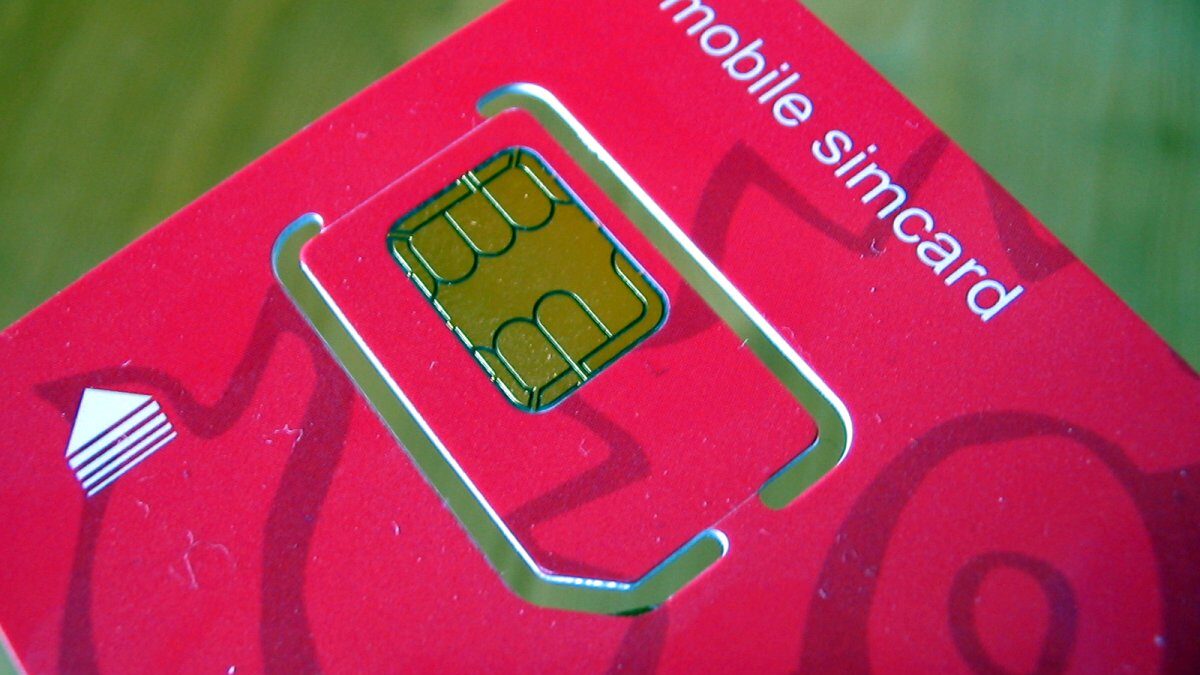
Image: SIM card, via Wikimedia Commons (CC).
The upsides buyers actually feel
The headline benefit is remote provisioning. Instead of waiting for a couriered card or fiddling with a paperclip, you scan a QR code or tap a carrier link and the profile downloads over the air. That makes carrier switching a software action instead of a hardware errand, which is genuinely good for competition and for consumers who were previously locked by the friction of the tray.
It also unbundles the idea of “one SIM, one line.” Most eSIM phones support dual or even multiple eSIM profiles, so a single device can hold a work number and a personal number, or — the use case travellers love — a permanent home line plus a cheap local data plan you download on landing. Travel eSIM marketplaces that sell pay-as-you-go data in dozens of countries only exist because the profile model makes them trivial to install and delete.
Manufacturers like eSIMs too, for less romantic reasons: no tray means more internal room for battery, a cleaner water-resistance story, and one fewer mechanical part to fail. As devices get thinner and more sealed, the removable tray is exactly the kind of legacy opening engineers are happy to delete.
The downsides nobody puts on the billboard
The flip side is that the thing you used to physically own is now a software state bound to the device. Moving your number to a different phone is no longer “pop the card out and in” — it is a carrier interaction, and some carriers make profile transfers fiddlier than the old swap ever was. If you buy a used eSIM phone, a profile left logged in is a privacy and security risk, so you must wipe it properly before handing it on; with a physical SIM the card simply came out.
There is also a lock-in and continuity wrinkle. A physical SIM is the most portable identity in telecom — it works in any compatible phone you slide it into. An eSIM is portable too, in principle, but only as far as the carrier’s transfer process allows, and policies vary wildly by operator and country. And because an active cellular identity is harder to remove, it is easier for a lost or stolen phone to keep broadcasting its location — a feature with both safety and surveillance implications depending on who holds the account.
iSIM: the next step
A related evolution is the iSIM (integrated SIM), where the identity moves off a separate eUICC chip and into the system-on-chip itself. The conceptual move is the same one eSIM made — from plastic to silicon — taken one layer deeper. For buyers today it is mostly a specification curiosity, but it points at where the industry is headed: identity that is even more embedded and even less something you can hand to someone else.
What to check on a phone in 2026
If you are buying this year, the spec sheet line that matters is no longer “has a SIM tray” but “which SIM modes does it support?” Verify four things. First, does it support eSIM at all, and if so how many profiles (one, two, more)? Second, is there still a physical SIM tray as a fallback — outside the US, iPhone models continue to ship with physical SIM support alongside eSIM, while US iPhone 14-and-later models are eSIM-only, so your region changes the answer. Third, check travel and dual-line behaviour: can you keep your home line and add a local data plan without removing anything? Fourth, for business or privacy-minded buyers, confirm the carrier transfer and remote-wipe steps so you know exactly how a profile leaves the device when it should.
Bottom line
eSIM is not a gimmick; it is a genuine shift in who controls your mobile identity. For most people the wins — instant carrier switches, multiple lines, painless travel data — outweigh the losses. But the loss that matters is real: you no longer hold the card. Treat your eSIM profiles like keys to the house, know your carrier’s transfer process before you need it, and a 2026 phone with no tray will feel like an upgrade rather than a cage.
Sources:
– Embedded SIM — Wikipedia
– SIM card — Wikipedia
– Universal Integrated Circuit Card — Wikipedia