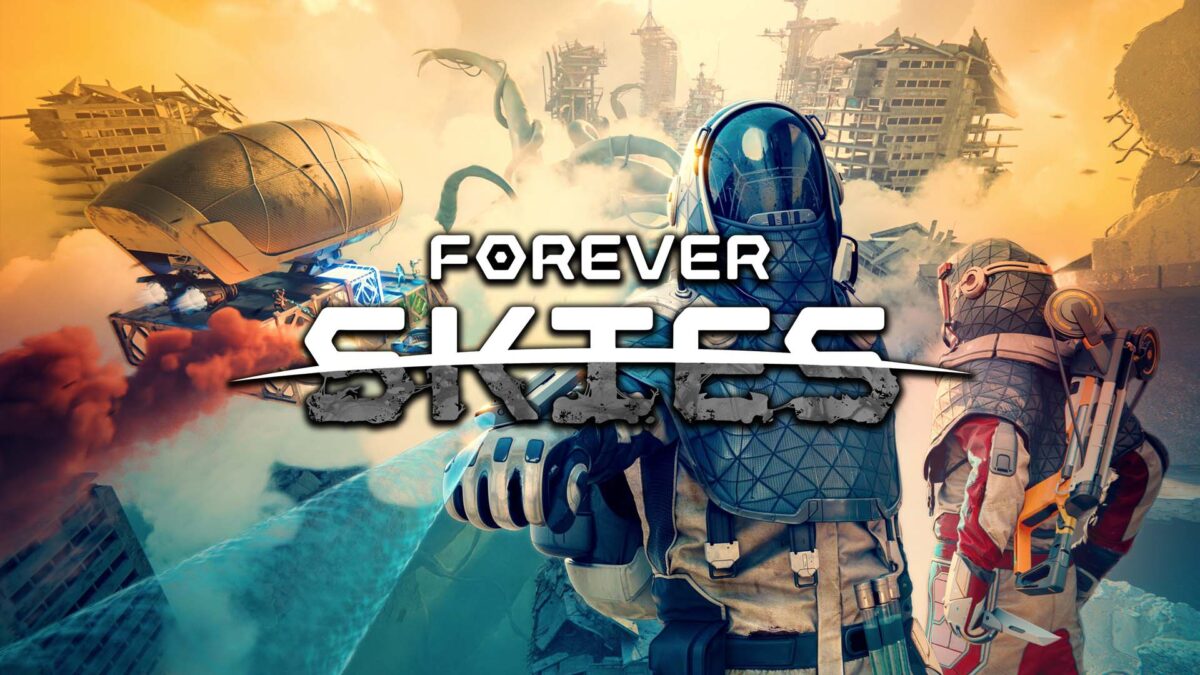
Forever Skies finally touched down on Xbox Series X|S on July 27 — and it arrived carrying more than a straight port. Developer Far From Home timed its biggest content update yet, The Final Echoes, to launch on the exact same day, which means console players start with the most complete version of the game that has ever existed. In a launch-day post on Xbox Wire, the studio’s Paul Milewski walked through what shipped and shared the tips the team most wishes new players knew. If you’re boarding the airship for the first time this week, here is what actually matters — and why some of the studio’s advice runs against typical survival-game instincts.
What Forever Skies is, in one descent
Forever Skies is a first-person sci-fi survival crafting game set hundreds of years after an ecological catastrophe made Earth’s surface uninhabitable. Toxic clouds blanket the planet, so your home, workshop, laboratory and getaway vehicle are all the same thing: a high-tech airship you build, customize and pilot across the ruins. You play a scientist — the game is explicit that you are not a soldier — sent back down to scavenge the remains of civilization and hunt for viral pathogens to cure an illness afflicting the last humans stranded in orbit. Periodically you’ll descend below the dust layer, where evolved flora and fauna have turned the surface into something genuinely alien.
On Xbox the game runs on Series X|S, supports solo play or online co-op for up to four players, and is listed at $34.99 on the Xbox store. It also supports Xbox Play Anywhere, so progress carries across Series X|S, Windows PC and Xbox-supported gaming handhelds — a meaningful perk for a game whose sessions alternate between long building stretches and short scavenging hops. The game first hit 1.0 on PC in April 2025 after a community-shaped Early Access run, and the Steam version is currently discounted alongside the console launch.
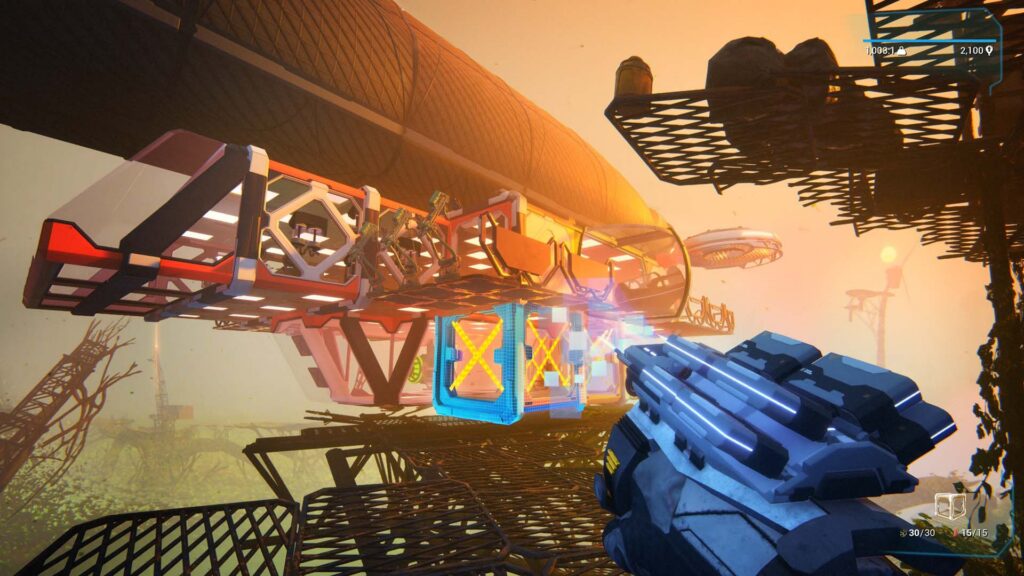
Image: Far From Home / Xbox Wire
The Final Echoes changes how your airship works
The headline system in The Final Echoes is electricity. Your airship now has a real power grid: generation has to keep up with consumption, and if your draw exceeds your output by too much, your devices start taking damage. That’s the stick. The carrot is what Far From Home calls Surplus Status — and it is not achieved the way you’d guess. Building generator after generator only keeps you in Stable Status. To reach Surplus, you have to upgrade your generators to capture lightning strikes during violent storms, deliberately overloading your grid with raw storm energy. Do it and the rewards are substantial: crafting stations work faster, resource-producing devices become more productive, and the airship itself gains extra flight speed with a built-in boost mode.
That inversion — flying into storms instead of around them — is the update’s cleverest piece of design pressure, and it pairs with a reworked damage system that changes how you maintain and protect the ship. Together the two systems give the airship a genuine operating cost: the vessel is no longer a static base that happens to move, but a machine whose upkeep decisions shape every expedition you plan. The update also adds more than 30 new side quests, new enemies and combat encounters, new sprawling landmark locations, and greater environmental variety across the game’s three biomes — a meaningful expansion for returning PC veterans as well, since none of this content existed at the 1.0 launch.
The studio’s own tips, and the logic behind them
Far From Home’s launch post is unusually candid about where new players go wrong. Four of its recommendations deserve unpacking.
Do the side quests as they appear, not later. In most survival games, side content is optional flavor you sweep up in the endgame. Here, some side quests reward devices and technology you may not find anywhere else — meaning skipping them can lock you out of tools that would make the next ten hours easier. The studio’s advice is blunt: don’t leave them until the end.
Kill the beacons behind you. Explorable locations are marked by flashing beacons at their highest point. Once you’ve stripped a site, pull the battery powering its beacon. The game never forces this housekeeping on you, but it turns the skyline into a self-made map of where you’ve already been — at a glance, unvisited sites still flash and cleared ones sit dark.
Duplicate your machines early. One water filter and one fabricator will keep you alive, but barely. The studio recommends building duplicate resource-producing devices well before it feels necessary, because production ramps compound — and in co-op, more mouths and more hands multiply both the need and the payoff. The airship is designed to grow; empty rooms are an invitation, not a decoration.
Fight like a scientist. Combat rewards preparation over aggression: electrical mines, alternate ammo types, stat boosters and openings, rather than charging in. The post literally invokes “Leeroy Jenkins” as the anti-pattern.
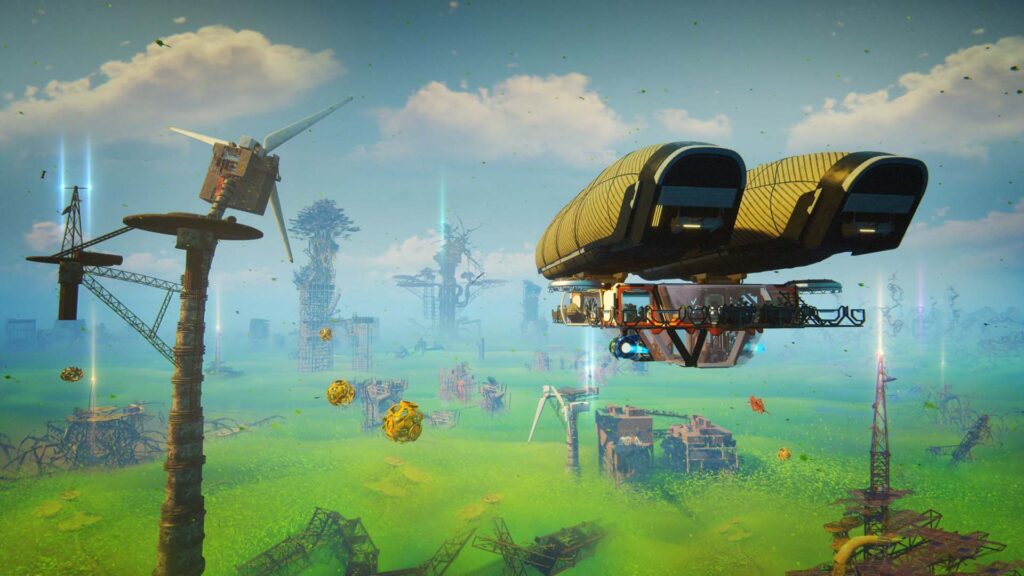
Image: Far From Home / Xbox Wire
Custom difficulty is the quiet star of this release
The Final Echoes also ships deep custom difficulty settings, and the detail that matters most sits in the fine print: using them does not disable achievements. You can tune how fast hunger, thirst, oxygen and energy deplete — or switch any of them off entirely — remove resource requirements from building and crafting, choose what you lose on death, and adjust enemy health, damage and spawn frequency. Every setting can be changed at any point mid-game, not just at world creation.
That flexibility solves a real tension the studio openly acknowledges: some players find hunger and thirst management tedious, others think there’s never enough starvation for their liking. Rather than balancing to one middle point, Far From Home handed the sliders to the player and — crucially for Xbox players — didn’t tax the choice with an achievement penalty. There’s even an accessibility option that replaces the game’s giant mantis enemies with, in the studio’s words, floating torso dudes, for players with a phobia of bugs.
Should new pilots start now?
The honest pitch: this is the best on-ramp Forever Skies has ever had. Console players skip the entire Early Access era and land directly on a version with a year of post-1.0 content, a launch-day mega-update, and difficulty controls that let a survival-skeptic tune the friction down without giving up progression. The genre’s usual first-week caveat — that console launches trail the definitive PC build — doesn’t apply here, because both platforms received The Final Echoes on the same day.
Co-op deserves a final word, because it changes the shape of the studio’s tips. Duplicate devices go from suggestion to requirement with four players drawing on one airship’s resources, and the new power grid becomes a shared budget the whole crew has to respect — one over-eager fabricator session can push the ship from Stable into device-damaging deficit while someone else is mid-flight.
If you start this week, let the studio’s advice set your first session’s agenda: chase the early side quests for irreplaceable tech, build your second fabricator before you think you need it, and when the first violent storm rolls in — point the airship at it.