The smart-home aisle used to be a polite war zone. A light that spoke Zigbee would not talk to a hub that spoke Z-Wave, and a lock certified for one app would sulk in another. Matter was supposed to end that, and several specification cycles in, it mostly has — but “Works with Matter” on a box in 2026 can mean very different things depending on which version shipped and which radio is inside. If you are actually buying gear this year, the logo is the start of the checklist, not the end of it.
Matter is a technical standard for smart-home and Internet-of-Things devices, published by the Connectivity Standards Alliance (CSA) and originally begun in December 2019 as Project Connected Home over IP (CHIP) with Amazon, Apple, Google, Comcast and others as backers. Its promise is simple to state and hard to deliver: one device, one setup, control from any major ecosystem — Alexa, Google Home, Apple Home and Samsung SmartThings — with the option of staying local so your lights still work when the cloud has a bad day. Under the hood it is an IP-based protocol that rides on existing plumbing: Wi-Fi for mains-powered gadgets, Ethernet for hubs and bridges, and Thread, a low-power wireless mesh, for battery sensors and sleepy little devices.
Read the version number, not just the badge
This is the part most buyers miss. Matter is not a single frozen feature set; it is updated roughly twice a year, and each release widens what a “Matter” device can actually do.
- Matter 1.0 (4 October 2022) shipped the core: lights, locks, outlets, thermostats, sensors, window coverings, bridges and media players.
- Matter 1.2 (23 October 2023) added nine new device types including refrigerators, dishwashers, laundry washers, robotic vacuums, air purifiers and portable air conditioners.
- Matter 1.3 (8 May 2024) extended into water and energy management and brought ovens, microwaves, cooktops, extractor hoods, laundry dryers and “Matter-casting” media players, plus scenes and command batching.
- Matter 1.4 (7 November 2024) turned toward electricity specifically — batteries, solar systems, home routers, water heaters and heat pumps — and the 1.5 line (committee build 1.5.0.1, 2 December 2025) continues that cadence.
A product stamped “Matter” but built against 1.0 simply cannot control your heat pump or report your solar output, because those capabilities did not exist in the spec yet. When a retailer or manufacturer lists a version, that number is the real story.

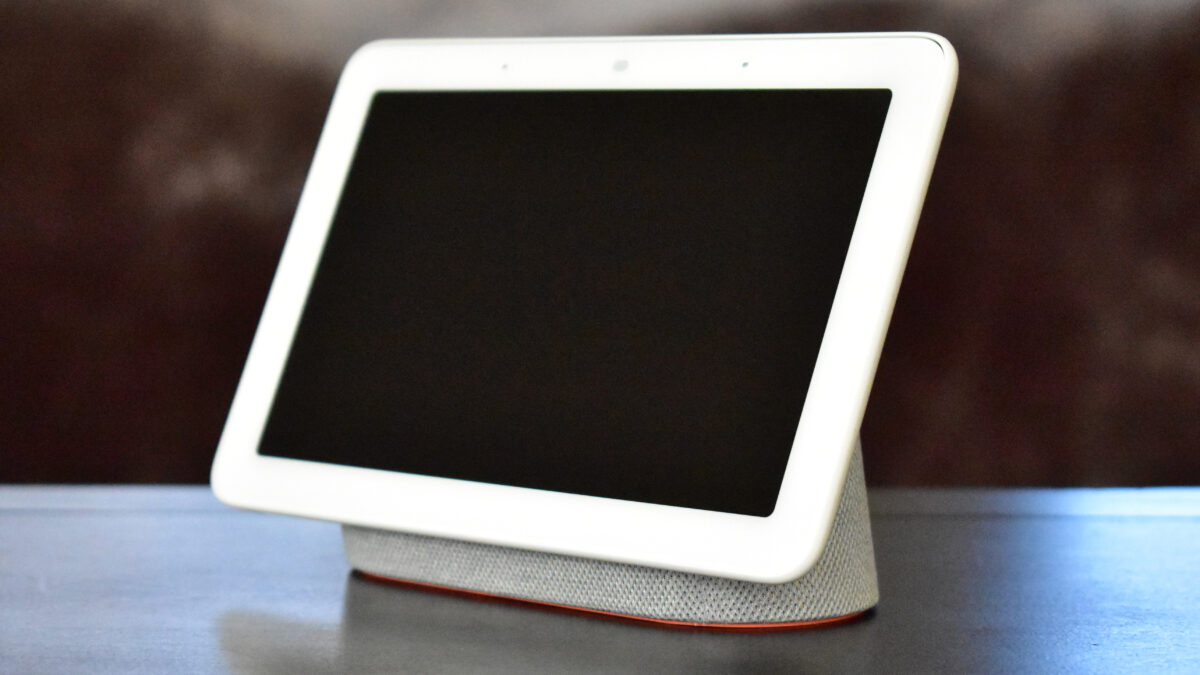
Image: Google Home Hub, via Wikimedia Commons (CC).
Match the transport to the device
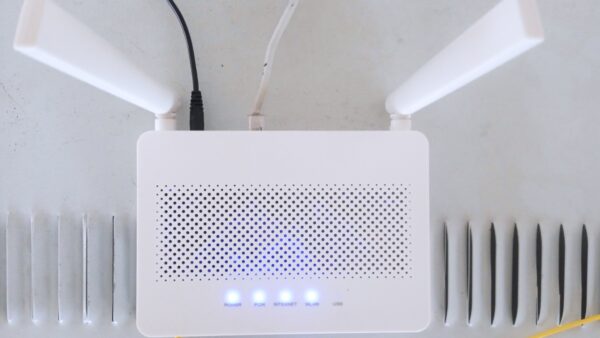
Matter is protocol-agnostic about the wire, and that is good — but it means you have to think about radios. Mains-powered gear (plugs, bulbs, TVs, routers) typically uses Wi-Fi. Battery sensors (door contacts, motion, humidity) almost always want Thread, which means they need a Thread border router somewhere on the network to reach the internet and your phone. Many recent smart speakers, displays and even some routers now include a Thread border router, but not all do, and a house full of Thread sensors with no border router is a house full of silent sensors.
Ethernet still matters for the things you never want to drop: the hub or bridge that anchors everything. If you are wiring a renovation, a couple of Ethernet drops to central hubs is the boring, reliable choice.
Bridges are not dead
Matter did not make your existing Zigbee and Z-Wave devices obsolete. A Matter bridge exposes those older devices to a Matter controller, so a mature Zigbee sensor network can keep working inside a shiny new Matter app. If you already own a drawer of non-Matter gear, look for a hub that bridges it rather than replacing everything at once. The standard explicitly supports this via bridge device types.
Energy and solar are the new frontier
If your 2026 buying list includes a home battery, solar inverter or a smart heat pump, Matter 1.4 is the version that starts to matter to you — literally. Devices certified against 1.4 can describe batteries, solar input and water heating to a controller, opening the door to “charge the battery when the panels are producing” automations without a vendor-specific app. This is early and fragmented across brands, but the spec foundation is there, and a device stuck on 1.0 or 1.2 cannot join that party.
The ecosystem fine print
Matter’s headline is cross-ecosystem control, and for on/off, dimming, locks and basic scenes it genuinely works across Alexa, Google, Apple and SmartThings from a single setup. The caveat buyers should know: advanced or brand-specific features — fine-tuned camera settings, proprietary automations, niche device states — frequently still live only in the manufacturer’s own app. Matter guarantees the front door opens from any platform; it does not guarantee every dial on the device is exposed everywhere. Read reviews for the specific feature you care about, not just the compatibility badge.
Security and local control
One of Matter’s quieter selling points is that it is designed for local control — your automations can run inside the home without phoning a server. That is both a privacy win and a reliability win during outages. Pair it with a solid home network (and consider a guest/VLAN separation for IoT devices), and the smart home stops being a cloud-dependency waiting to expire.
What to verify on the box in 2026
Before you tap “add to cart,” confirm four things. First, the Matter version — for appliances, energy or solar, insist on 1.3 or 1.4. Second, the radio — Wi-Fi for plugged gear, and a Thread border router present for battery sensors. Third, bridge support if you have legacy Zigbee/Z-Wave kit you want to keep. Fourth, ecosystem scope — know which advanced features are Matter-exposed versus trapped in the vendor app. A product that nails those four is a safe 2026 buy; one that only shows the logo is a question mark.
The bottom line: Matter has crossed from promise to practical for lights, locks, sensors and thermostats, and is now reaching into the energy-consuming heart of the home. Buy by version and transport, not by sticker, and the 2026 smart home finally behaves like one home instead of five feuding fiefdoms.
Sources:
– Matter (standard) — Wikipedia
– Thread (network protocol) — Wikipedia
– Smart home — Wikipedia