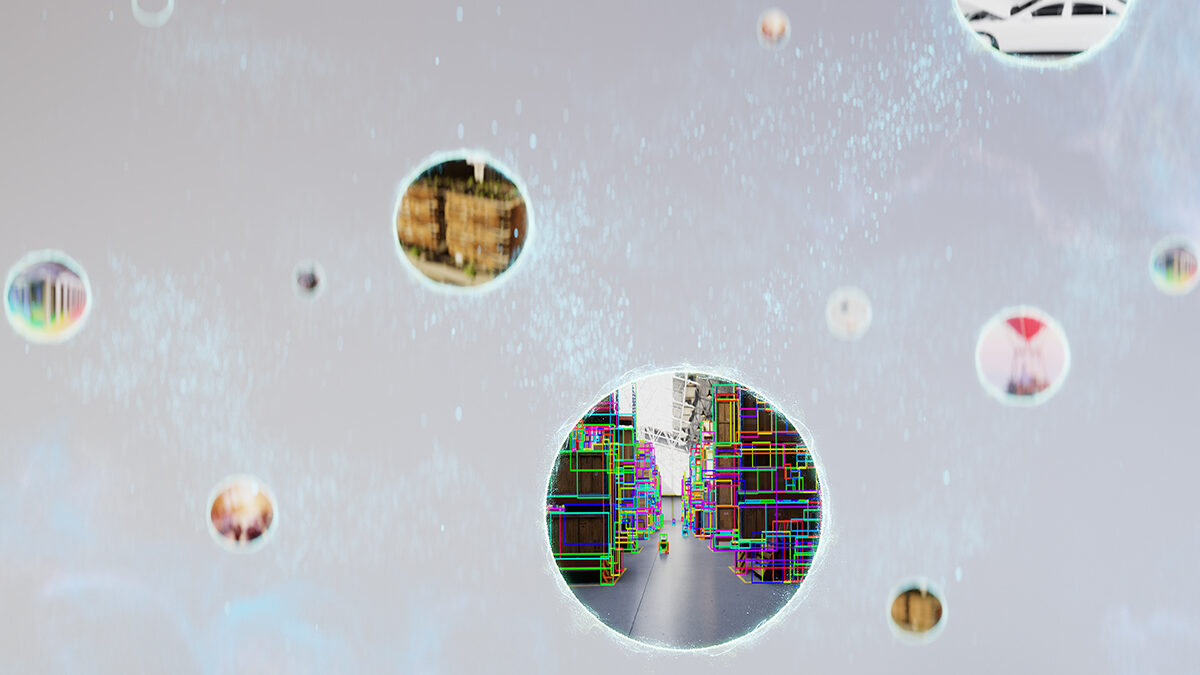
NVIDIA released Cosmos 3, an open family of world foundation models designed to simulate physical environments and predict future states for robotics, autonomous vehicles, and vision AI systems. The launch addresses a persistent challenge in physical AI development: collecting training data for rare events and edge cases is expensive and often unsafe to reproduce in real-world settings.
The family ships in three sizes. Cosmos 3 Super, with 64 billion parameters, targets high-fidelity world modeling. Cosmos 3 Nano, at 16 billion parameters, serves efficient reasoning and post-training. Cosmos 3 Edge, the smallest at 4 billion parameters, runs on edge GPUs and enables on-device vision reasoning and robot policy deployment across NVIDIA RTX GPUs, DGX systems, and Jetson platforms including Jetson Thor NVIDIA blog.
Benchmark results place Cosmos 3 at the top of several evaluation sets. According to NVIDIA, Cosmos 3 ranks first on Artificial Analysis for open-weights text-to-image and image-to-video generation, first on PAI-Bench for world generation, and first in the image-to-video category of Physics-IQ. For robot policy tasks, it leads on RoboLab, while Cosmos 3 Super tops VANTAGE-Bench for vision understanding NVIDIA blog.
NVIDIA released Cosmos 3 under the Linux Foundation’s OpenMDW 1.1 license, allowing teams to adapt model weights and run post-training on their own hardware. Companies already building on the models include Doosan Robotics, LG Electronics, Samsung Electronics, and Skild AI in robotics, plus Li Auto, Xiaomi, and Afari in autonomous vehicles. Vision AI deployments using Cosmos 3 span Centific, Fogsphere, Linker Vision, Milestone Systems, and Yuan for industrial and smart spaces applications NVIDIA blog.
The release extends the NVIDIA Cosmos Coalition, which recently expanded to Japan to collaborate with robotics and manufacturing leaders on open world models for factories, logistics, agriculture, construction, healthcare, and transportation NVIDIA blog.
Developers can access technical reports, model collections on Hugging Face and GitHub, and OpenUSD documentation through NVIDIA’s Omniverse resources Omniverse News OpenUSD overview. OpenUSD provides the open framework for composing, reusing, and exchanging complex 3D data across digital twins, simulations, and synthetic data generation workflows.
For teams building physical AI systems, Cosmos 3 offers a way to generate synthetic training data, test policies in simulation, and specialize models without assembling separate tools for each capability. The open licensing and tiered model sizes lower the barrier for organizations that need world modeling but lack resources to train foundation models from scratch.
For more on NVIDIA’s physical AI roadmap, see NVIDIA’s Cosmos 3 Edge Brings Robot World Models to the Edge and NVIDIA, Microsoft and IBM Launch Open Secure AI Alliance.
Editorial note: Citation cleanup: we trimmed duplicate citation links that repeated the same source after multiple paragraphs. Every fact and quote is unchanged; the source remains cited where each claim appears.