
OpenAI is taking its data center buildout to the American Southeast, and this time it arrived with a promise sheet. On July 22 the company announced Project Camellia, a long-term data center campus in Effingham County, Georgia, backed by a contract with Georgia Power for 3.2 gigawatts of electricity delivered in phases between 2028 and 2032. That is enough power for more than 2 million homes, flowing instead into what local reporting pegs as a $20 billion, entirely privately funded AI campus — and by Thursday evening, hundreds of residents were packed into a Rincon school hall asking what it means for their county.
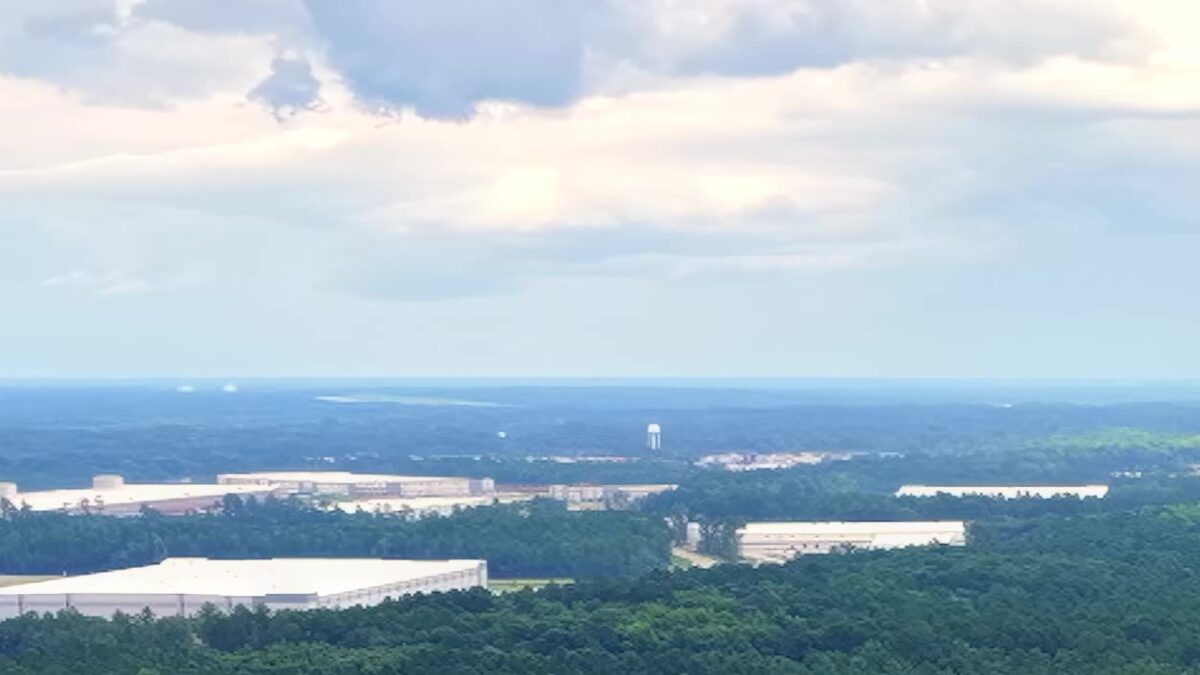
The site sits inside the Savannah Gateway Industrial Hub, a pre-existing, industrially zoned 2,600-acre warehouse development just outside Rincon. According to the Development of Regional Impact form filed with the state — reported by The Current GA — the project comprises four data center buildings covering roughly 101 acres, with the developer listed as Octans GA LLC and the land owned by the Effingham County Industrial Development Authority. OpenAI’s only other self-built campus at this scale is in Abilene, Texas, which the company says is already training frontier models.
The promise sheet is unusually specific
Data center announcements usually lead with jobs and gloss over the grid. OpenAI inverted that. Its first stated commitment is that electricity rates will not go up for residents because of this project: OpenAI says it will pay the full infrastructure and electric-service costs, which under Georgia Public Service Commission rules cannot be passed on to existing ratepayers. The campus is also designed to proactively curtail its own power draw during periods of peak demand — a direct answer to the most common criticism of hyperscale AI facilities, that they quietly raise everyone else’s utility bill and strain the grid during heat waves.
On water, the second flashpoint for data center opposition nationwide, OpenAI says the campus will run a closed-loop cooling system that recirculates water like a car radiator rather than continuously withdrawing from local supplies. Ongoing water use, the company claims, will be comparable to an office building with the same headcount — restrooms, kitchens, sanitation.
Then comes the money. OpenAI has pledged $80 million in community benefits over the life of the project, directed at schools, public safety, health care, workforce training, housing, and small businesses. Separately, up to $71 million in Codex credits will be made available to eligible Georgia college, community college, and technical school students — $100 each, delivered through their ChatGPT accounts, to build software with OpenAI’s agentic coding tool. And to keep itself honest, the company committed to an annual, publicly released audit by an independent firm measuring whether it is actually meeting these commitments.
What Effingham County gets — and gives up
The fiscal math explains why county officials courted the deal. Even with a 50% property tax abatement for 15 years, OpenAI is expected to become the largest taxpayer in Effingham County history, paying what it describes as hundreds of millions of dollars in state and local taxes. County Manager Tim Callanan has floated using the windfall to accelerate “Project Zero,” the county’s plan to eliminate homestead property taxes — telling The Current GA the average homeowner’s property rate could drop by roughly 40% as early as next year. Add thousands of construction jobs, permanent on-site roles, and a stated preference for local contractors, and the pitch to a county of commuters becomes obvious.
But the announcement also landed with friction. Residents near the Savannah Gateway site told reporters they learned about the project only when it went public, and environmental advocates flagged that a zoning amendment adding data centers to the county’s approved uses was buried inside a 771-page document, discussed at a commissioners’ meeting the day before the announcement without appearing in the agenda summary. Blandford Elementary School, with more than 900 students, sits less than a mile from the site. “We’re playing catch up,” is how One Hundred Miles’ Jeff Beauvais put it — a transparency complaint that has become the standard opening act for nearly every American mega-data-center this year.
What happens next
OpenAI held its public open house on July 23 at the Effingham College & Career Academy in Rincon, with hundreds attending. Input from that meeting is supposed to feed a “Georgia Community Compact” — a document translating community priorities into specific, accountable commitments as the project develops. Before any construction starts, Project Camellia must also clear Georgia’s Development of Regional Impact review, the state process for projects whose effects spill beyond a single municipality.
The company is publishing project updates at projectcamellia.com, and significant details — phasing, financing, final design — remain open. What makes Camellia worth watching is less its size than its structure: rate protection written against PSC rules, audited community commitments, and demand-response baked into the design. If those promises hold, this becomes the template OpenAI carries to every county it visits next. If they don’t, the annual audit will say so in public.