
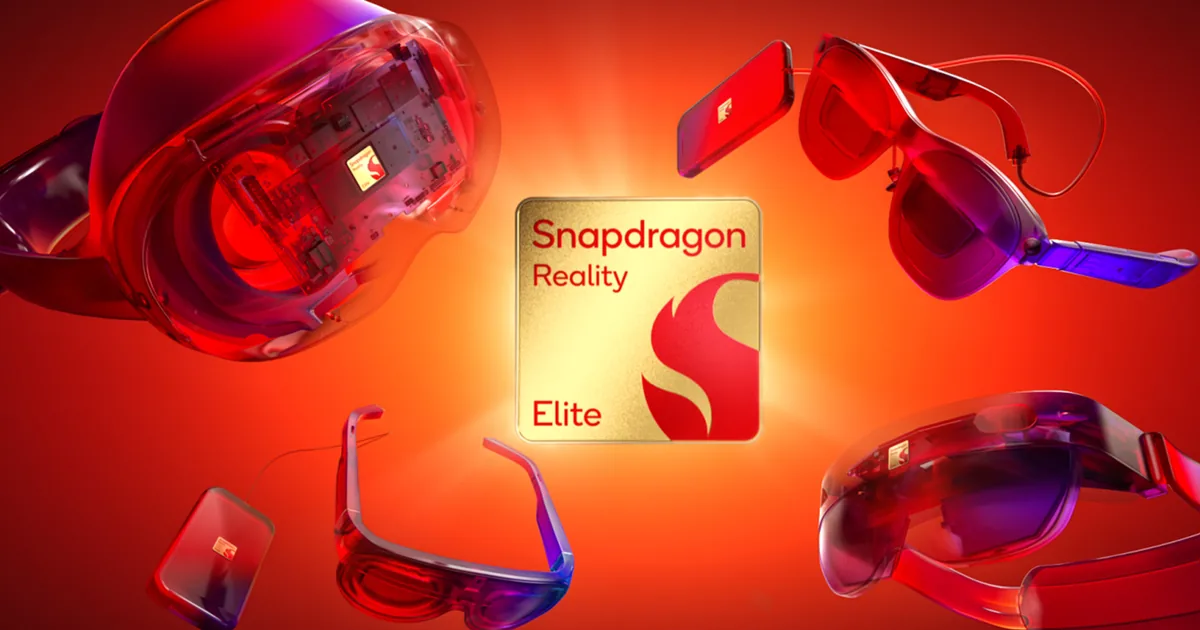
Bottom line: Qualcomm’s Snapdragon Reality Elite is the first merchant silicon purpose-built for lightweight, AI-capable AR glasses — enabling on-device LLMs, dual 4K micro-OLED drive, and multi-day battery in a sub-100 g form factor, with consumer devices slated for late 2026.
Qualcomm has unveiled the Snapdragon Reality Elite platform, a purpose-built chipset designed to power a new generation of lightweight augmented-reality glasses that run generative AI locally, drive dual 4K micro-OLED displays, and target multi-day battery life in a form factor closer to standard eyewear than bulky headsets Qualcomm’s latest chip hints that more powerful smart glasses could be on the way.
The platform integrates a dedicated neural processing unit, a high-efficiency ISP for sensor fusion, and a new Wi-Fi 7/Bluetooth 5.4 subsystem optimized for low-latency tethering to phones or pocket compute pucks. (qualcomm.com)
What does Snapdragon Reality Elite mean for smart glasses? It makes on-device generative AI, 4K-per-eye visuals, and all-day wear technically viable at scale — solving the thermal, display, and connectivity constraints that relegated prior generations to demos or niche enterprise. First commercial devices from three Tier-1 OEMs are expected before the end of 2026.
!Qualcomm Snapdragon Reality Elite reference design showing smart glasses form factor
Snapdragon Reality Elite: silicon engineered for the glasses form factor
Unlike the Snapdragon XR2 Gen 2 that powers Meta Quest 3 — a chip designed for standalone headsets with active cooling — Reality Elite targets a thermal budget passively dissipated through temple arms and a thin chassis.
Qualcomm achieves this by partitioning workloads across a high-performance CPU cluster for graphics and an always-on NPU block that handles sensor fusion, eye tracking, and on-device LLM inference at milliwatt levels Qualcomm’s latest chip hints that more powerful smart glasses could be on the way.
The ISP supports up to 12 concurrent camera streams for hand tracking, depth mapping, and environmental understanding without waking the main cores.
Developers gain a unified SDK exposing the NPU through standard ONNX Runtime and Qualcomm’s AI Engine Direct, meaning existing PyTorch or TensorFlow Lite models can be quantized and deployed without vendor-specific toolchains. This matters for teams building real-time translation, contextual notification filtering, or semantic scene understanding — workloads that previously required cloud round-trips and killed battery life on tethered glasses. For more on XR developer tooling, see our Snapdragon Spaces SDK deep dive.
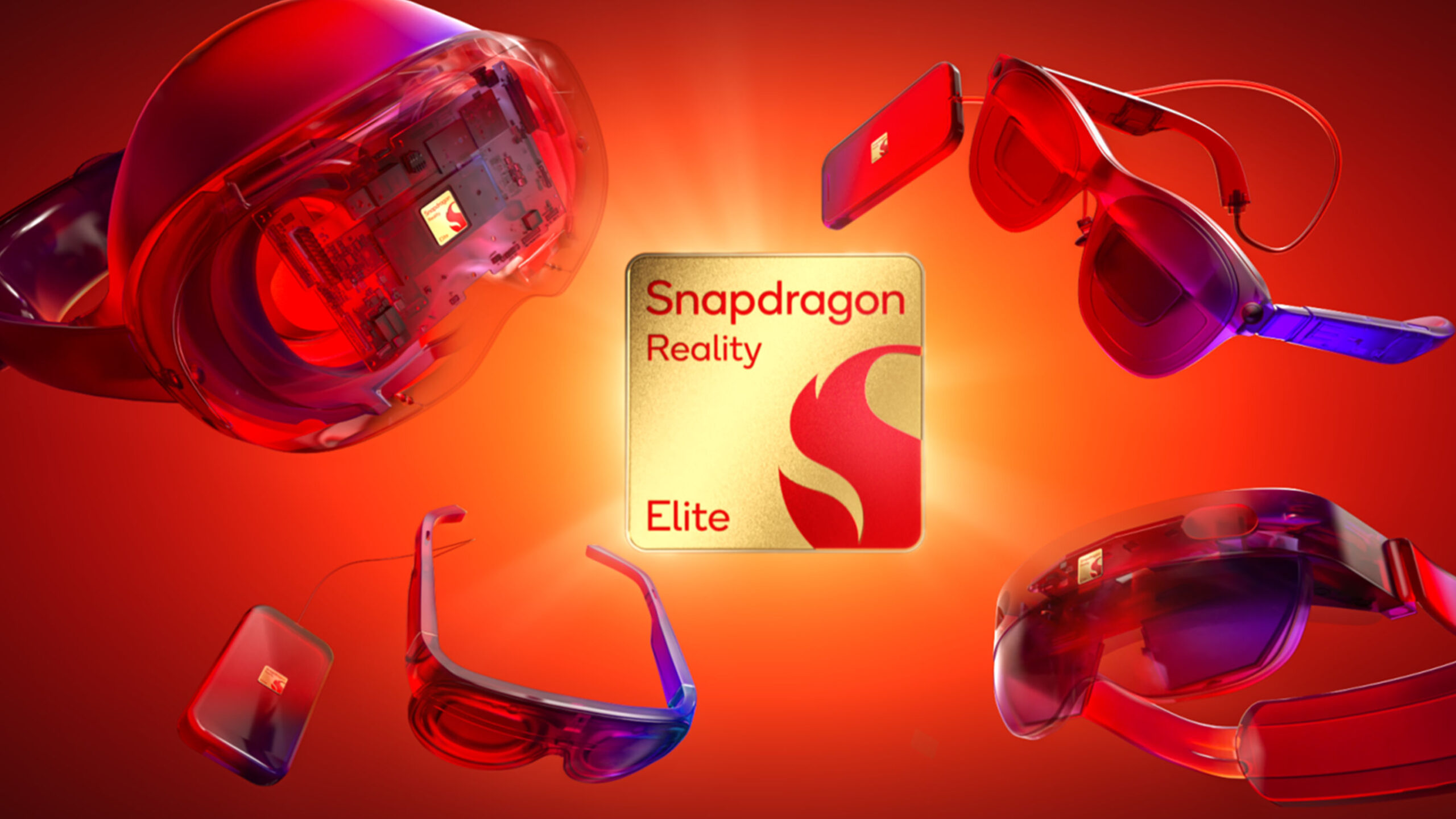
Display pipeline built for micro-OLED density
The display subsystem drives two 4K × 4K panels at 90 Hz with foveated rendering support, leveraging the GPU’s variable-rate shading hardware to concentrate compute where the user’s gaze lands.
Qualcomm claims the pipeline adds under 3 ms motion-to-photon latency when paired with its new low-persistence micro-OLED reference modules, a threshold critical for avoiding vergence-accommodation conflict in all-day wear Qualcomm’s latest chip hints that more powerful smart glasses could be on the way.
The platform also includes a hardware compositor that blends passthrough camera feed with rendered content at display refresh rate, enabling optical-see-through and video-see-through architectures from the same silicon.
For optical engineers, the chip exposes per-pixel color correction and distortion LUTs programmable at runtime, reducing the calibration burden on waveguide or birdbath optics vendors. This flexibility could accelerate the fragmented optics supply chain that has slowed glasses adoption — each OEM no longer needs a custom display ASIC.
Connectivity architecture splits compute across body-worn devices
Reality Elite introduces a dual-link architecture: a high-bandwidth, sub-2 ms latency link to a pocket compute puck or smartphone for heavy rendering, and a low-power Bluetooth LE Audio broadcast channel for sensors, notifications, and voice.
The Wi-Fi 7 PHY supports 320 MHz channels in 6 GHz band, enabling 5.8 Gbps sustained throughput for compressed 4K frame streams — enough to offload GPU-intensive scenes to a Snapdragon 8 Gen 4-class phone while the glasses handle pose, eye tracking, and UI composition locally Qualcomm’s latest chip hints that more powerful smart glasses could be on the way.
This split matters for developers targeting cross-device experiences. The Snapdragon Spaces SDK now includes a distributed compute runtime that automatically migrates workloads between glasses NPU, phone GPU, and cloud based on thermal state, battery, and network conditions. A navigation app, for example, can run SLAM on the glasses, render map tiles on the phone, and fetch POI embeddings from a cloud LLM — all orchestrated through a single API surface.
Developer implications: on-device AI becomes baseline
The platform’s NPU delivers 45 TOPS INT8 with sparse acceleration, sufficient for 7B-parameter quantized LLMs at interactive token rates. Qualcomm provides reference implementations for Whisper.cpp (speech-to-text), LLaVA-1.5 (vision-language), and MobileSAM (segmentation) optimized for the NPU’s memory hierarchy. These models run entirely on-device, eliminating latency and privacy concerns that have limited voice-first glasses interfaces.
For enterprise developers building field-service or logistics workflows, the platform supports Android XR and OpenXR runtimes simultaneously, with a shared spatial anchor store. This means a single APK can target Reality Elite glasses, Meta Quest headsets, and future Android XR devices without forked rendering paths.
The Qualcomm XR Enterprise Toolkit adds device management, kiosk mode, and OTA update orchestration — features that have been table stakes for rugged handhelds but absent in early glasses pilots. See our Android XR platform analysis for the software stack context.
Battery reality check: multi-day means mixed reality duty cycles
Qualcomm’s “multi-day battery” claim assumes a duty cycle dominated by always-on sensors and intermittent display wake, not continuous 4K rendering. The reference design pairs the glasses (≈150 mAh in temples) with a 3,000 mAh neckband or pocket puck, yielding roughly 16 hours of mixed use: persistent notifications, periodic AR overlays, and 2–3 hours of immersive sessions Qualcomm’s latest chip hints that more powerful smart glasses could be on the way. Developers should profile apps against three power profiles:
- Always-On (sensors + NPU, <50 mW)
- Interactive (display + CPU, 500 mW–1 W)
- Immersive (dual 4K + GPU, 2–3 W)
Design fallback UIs that gracefully degrade to audio/haptics when the puck hits reserve.
Competitive landscape: Meta, Apple, and the tethered-glasses race
Meta’s Orion prototype demonstrated wireless puck architecture in 2024 but remains a research project with no merchant silicon. Apple’s Vision Pro uses a custom R1 co-processor for sensor fusion but relies on M2 for compute, resulting in a 600 g headset with external battery.
Reality Elite is the first merchant platform explicitly targeting the sub-100 g glasses + puck segment with integrated NPU, display drive, and connectivity — a category that Xreal, Viture, and Rokid have addressed with smartphone-tethered accessories but without on-device AI or standalone sensor fusion.
Google’s Android XR announcement at I/O 2026 positioned the OS as the software layer for this hardware class, and Qualcomm’s platform is the launch silicon. The two announcements are coupled: Android XR’s Spatial SDK assumes Reality Elite’s distributed compute runtime, and early access program participants receive matched hardware/software drops.
What ships first and what it means for roadmap planning
Qualcomm confirms three Tier-1 OEMs have committed to 2026 launches: one consumer lifestyle brand targeting creator workflows, one enterprise ruggedized SKU for field service, and one fashion-focused collaboration. Developer kits based on the reference design ship in Q3 2026 with pre-certified regulatory modular approvals for FCC, CE, and TELEC — reducing time-to-market for custom SKUs by an estimated 4–6 months.
For product teams evaluating 2027 roadmaps, the signal is clear: on-device generative AI in glasses is no longer a research topic. The silicon exists, the SDK is public, and the supply chain is moving. The differentiator shifts to optics, thermal industrial design, and the quality of the distributed compute runtime — areas where software investment now compounds across hardware generations. For related coverage, see our XR wearables market forecast 2025-2027.