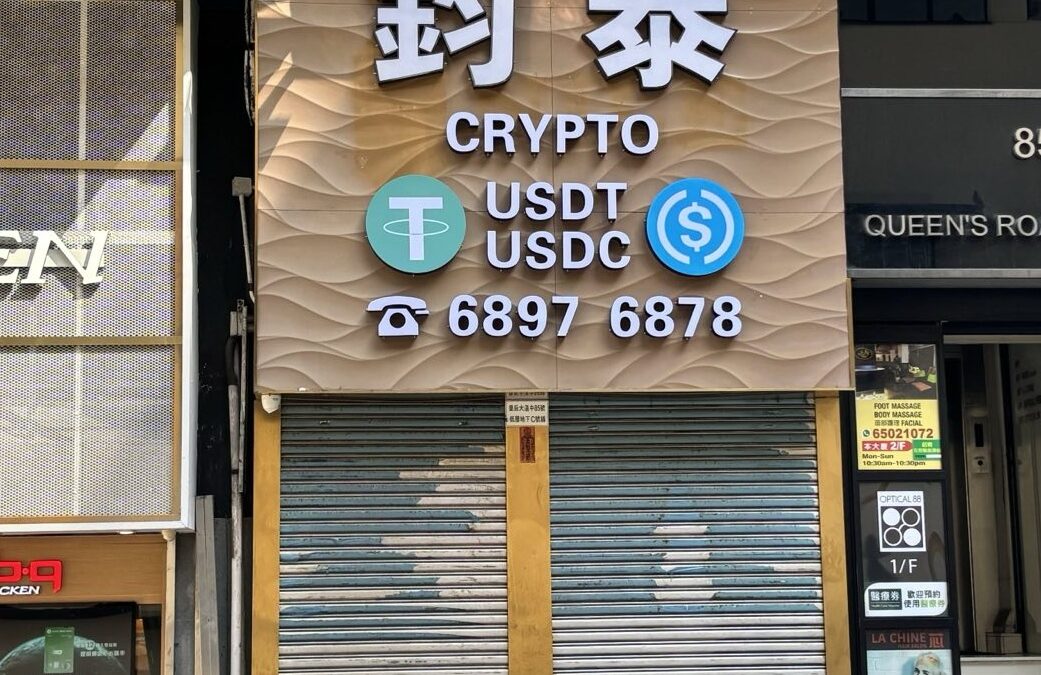
For most of the last decade, stablecoins were a tool traders used to park value between crypto bets. In 2026 that framing is outdated. The clearest non-speculative use case to actually reach operating businesses is cross-border payments: using a dollar-pegged token like USDC to pay a supplier in another country, collect from an overseas customer, or move treasury between entities without waiting on correspondent banks. The appeal isn’t ideological — it’s mechanical. A stablecoin payment can settle in seconds, works on weekends, and skips the fee stack that traditional wires accumulate across intermediary banks.
The reason this works is structural. A fiat-backed stablecoin such as USDC is a token redeemable 1:1 for US dollars held in reserve by its issuer, Circle. Because it lives on public blockchains, any two parties with a wallet can transfer it directly; there is no central counterparty routing each payment. Circle frames this explicitly as “low-cost, near-instant global payments,” and its network tooling is built around sending fiat at “stablecoin speed” — a direct claim about the settlement advantage versus legacy rails Circle USDC. That is the whole business case in one sentence.
Why businesses look at it
The traditional cross-border wire is slow and opaque. A payment from a US account to, say, a vendor in Southeast Asia or Latin America can take one to three business days, and each correspondent bank in the chain can deduct a fee and add a delay. Exchange-rate conversion at each hop introduces slippage. For a company paying dozens of contractors or suppliers weekly, those frictions compound into real float and reconciliation overhead.
A stablecoin transfer collapses that to a single on-chain transaction. The sender holds dollars as USDC, sends the token to the recipient’s wallet address, and the recipient receives it within the block time — seconds to minutes — any day of the year. The recipient can then keep it as USDC, or convert to local currency through an off-ramp (an exchange or a payments provider). Wikipedia’s treatment of the category names cross-border payments as one of the primary real-world uses of stablecoins, sitting alongside trading and remittances Stablecoin. That is the use case moving from theory into treasury operations.
The programmability dividend
The part traditional rails can’t match is programmability. Because a stablecoin payment is just a smart-contract call, businesses can encode logic directly into the money movement: release milestone payments automatically when a condition is met, split a single incoming payment across multiple payees, or attach metadata that reconciles against an invoice without a manual step. For platforms paying out creators, affiliates, or gig workers across dozens of countries, that turns a back-office chore into an API call. Visa, which has been settling portions of its own treasury and piloting stablecoin-linked settlement with partners, frames the opportunity around programmable, always-on money movement rather than just cheaper transfers Visa newsroom.
Where the savings actually show up
The savings aren’t a flat percentage — they depend on corridor and volume. The clearest wins are:
- Speed of float. Money isn’t stuck in transit for days, so smaller treasuries don’t need as large a buffer for pending payments.
- Fewer intermediaries. A direct on-chain transfer removes the per-bank deductions of the correspondent chain.
- 24/7 settlement. Payrolls and supplier runs that land on a Friday actually arrive on a Friday.
- Built-in records. The transaction is its own audit trail, which simplifies reconciliation for finance teams.
None of this requires a business to “believe in crypto.” It requires them to hold dollars, send dollars, and receive dollars — just through a different rail.
The risks you have to price in
Adopting stablecoins for payments is not free of risk, and a serious use-case assessment has to name them. The first is de-pegging: a stablecoin is only worth a dollar if the market believes the reserve backs it. Brief de-pegs have happened across the sector, so treasuries should stick to the largest, regularly attested issuers and avoid treating any token as risk-free. The second is regulation: stablecoin rules differ sharply by jurisdiction — the EU’s MiCA framework, UK systemic-payment rules, and US legislation passed in 2025 each draw different lines around who may hold and transact stablecoins and how reserves must be managed. A payments workflow that is fine in one country can be restricted in another. The third is off-ramp reliance: receiving USDC is easy; converting it to local bank dollars depends on a licensed off-ramp existing in your recipient’s jurisdiction.
There is also counterparty and technology risk — wallets can be compromised, and a mistaken address is usually unrecoverable. These are operational risks that traditional banking largely hides behind dispute processes, and a business has to own them directly.
Who is actually doing it
Beyond the issuers, payment processors have woven stablecoin settlement into products businesses already use. Stripe and Shopify, among others, have rolled out stablecoin payout and settlement options that let merchants accept or disburse dollars as USDC without manually touching a wallet — the crypto plumbing is hidden behind a normal dashboard. That “invisible” version of the use case is where adoption accelerates, because it removes the requirement that a small business hire someone who understands blockchains. The underlying token is still USDC, but the interface is a familiar payout screen.
Bottom line for a finance team
The stablecoin cross-border use case is real in 2026, but it rewards a measured rollout. Start with a single high-friction corridor where wire delays and fees are obvious — a recurring batch of overseas contractors is the classic pilot. Use a major, attested issuer, keep exposure short (don’t park idle treasury in the token longer than needed), confirm off-ramps exist for every recipient, and document the regulatory posture in each jurisdiction. Done that way, stablecoins aren’t a bet on the future of money; they’re a faster, programmable wire that happens to settle on a public blockchain.